
Every resumption season, a familiar, heartbreaking scene plays out across private primary schools. While most children gather for morning assembly, a handful are quietly guided toward the administrator’s office, waiting for their parents to pick them up. Their offense? An unpaid balance on their termly invoice.
When we discuss the “out-of-school children” crisis, the narrative often focuses on macro-economics or systemic lack of infrastructure. But on the ground, the issue is frequently much simpler and more design-focused: Rigid, upfront payment structures that treat primary education as a luxury commodity rather than an ongoing developmental need.
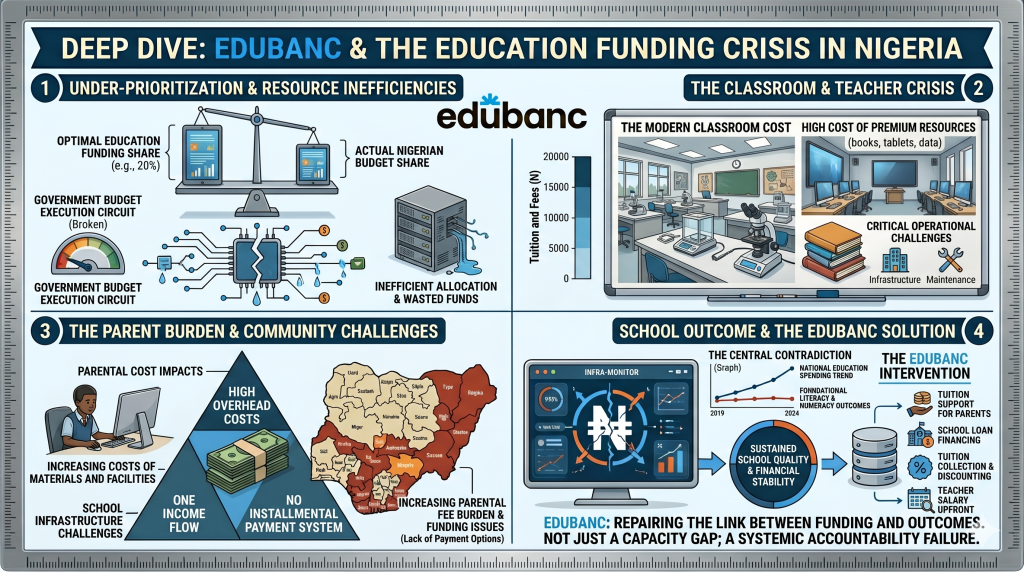
For working-class and mid-income families, the demand for a massive lump-sum payment every four months is a structural bottleneck that directly compromises a child’s foundational learning.
The Seasonal Financial Shock for Parents
For the average household, the school calendar represents a series of steep financial hurdles. When a child transitions to a new class or begins a new term, tuition isn’t the only bill that drops. Parents are simultaneously hit with a wave of upfront demands:
- Textbooks and Workbooks: Which must be bought brand new each year.
- School Uniforms and Sportswear: To accommodate fast-growing kids.
- Stationery, Transportation, and Feeding Levies.
When a primary school rigidly demands 100% of these fees before a child can set foot in a classroom, it creates an artificial liquidity crisis. A parent might have a stable monthly salary or a steady business income, but their revenue flows in cycles. Forcing a parent to produce three to four months of capital all at once causes severe budgeting strain.
When a minor cash flow delay happens, such as a late client invoice or an unexpected medical bill, the school fees are delayed. The result? The child is sent home, missing critical foundational weeks of numeracy and literacy.

The Hidden Cost to the School: The Churn Rate
Many primary school administrators defend rigid structures by pointing to their own operational realities. Schools have massive, immediate overhead at the start of a term: they must pay teacher salaries, maintain facilities, purchase teaching aids, and settle utility bills. They rely on upfront cash to survive.
However, a strict “no pay, no entry” policy actually hurts a school’s long-term financial health in two major ways:
- The Administrative Nightmare of Arrears: Spreading spreadsheets across an administrative desk to track who owes what, sending aggressive reminder letters, and managing manual cash/transfer reconciliations stretches thin school offices to their limit.
- Student Churn and Empty Desks: When a parent falls behind and experiences the embarrassment of their child being excluded, they often pull the child out entirely to look for a cheaper, less rigorous school. The primary school doesn’t just lose that term’s fee; they lose the lifetime value of that student from Basic 1 through Basic 6.
A Different Approach
The solution lies in closing the gap between how parents earn money (monthly or weekly) and how schools need money (termly). Forward-thinking schools and emerging education fintech platforms are proving that flexible payment frameworks keep classrooms full and school accounts stable.
- For the Pupils: They enjoy uninterrupted learning during their most critical formative years. They are spared the psychological trauma and social stigma of being singled out or sent home due to financial issues.
- For the Parents: School fees transition from a terrifying, seasonal crisis into a predictable, manageable line item in the monthly household budget.
- For the Schools: Instead of facing erratic, uncollected debts and a high student turnover rate, the school secures a highly predictable, recurring revenue stream that keeps operations running smoothly all year long.

The Bottom Line is a child’s primary education should never be disrupted by a calendar deadline. By replacing rigid payment structures with human-centric, flexible alternatives, private primary schools can protect their enrollment numbers, support hard-working parents, and most importantly, keep children right where they belong, in the classroom.
Are school fee deadlines causing you to lose students?
Don’t let rigid payment structures empty your classrooms. Discover how our flexible billing management system bridges the gap for parents while securing your school’s termly revenue.