
Category: Education Financing

  • School Fees Loan in Nigeria: What Parents Should Know

    School Fees Loan in Nigeria: What Parents Should Know

    School resumption always seems to bring a fee invoice attached to it, and for many Nigerian parents, that invoice doesn’t wait for a convenient payday. Rent, transport, feeding, and other household expenses tend to land in the same stretch of the calendar, which makes raising a lump sum for tuition one of the harder financial moments of the term. A school fees loan can bridge that gap, but not every loan is built the same way, and the terms you agree to can make the difference between a helpful solution and a financial headache down the line. Before you sign up for one, here’s a practical checklist to work through.

    Why Parents Are Turning to School Fees Loans

    Rising tuition, inflation, and unpredictable income have made lump-sum payments harder to manage every term. Many schools in Nigeria still expect payment in full at the start of the session, even though household income doesn’t always arrive in one convenient sum. That mismatch is pushing more parents toward financing instead of scrambling to raise the full amount at once, a shift we’ve written about in How to Pay School Fees When You Don’t Have the Full Amount at Once.

    Borrowing for tuition isn’t inherently risky. It only becomes a problem when it’s taken quickly, without reading the fine print, or without a clear plan for repayment. Understanding what to look out for beforehand puts you back in control of the decision.

    The Different Ways Parents Borrow for School Fees

    Before getting into what to check, it helps to know the general options available. Some parents turn to traditional banks, which often require collateral or a long-standing relationship with the institution. Others rely on cooperative societies through their workplace, which can offer lower interest but usually move slower and depend on how much has been contributed over time. A growing number are turning to fintech platforms and education-focused lenders, which tend to offer faster approval and repayment plans built specifically around school terms rather than generic loan cycles. Each route has its place, but the checklist below applies no matter which one you’re considering.

    What to Check Before You Take a School Fees Loan

    1. The interest rate and the total repayment amount
    Don’t just look at the monthly figure. Ask the lender to break down exactly how much you’ll repay in total, including interest, so you know the real cost of borrowing before you commit. A loan that looks affordable monthly can still add up to a lot more than the original fee by the time it’s fully repaid.

    2. Processing fees and other hidden charges
    Some lenders add administrative or processing fees on top of interest, and these aren’t always advertised clearly upfront. Request a full list of charges before signing anything, so there are no surprises once repayment begins.

    3. Repayment schedule versus your income pattern
    A loan that expects repayment on the 5th of every month won’t work well if your salary lands on the 25th. Match the repayment date and frequency to when money actually comes in, rather than accepting whatever schedule the lender defaults to. This one detail is often the difference between a loan that feels manageable and one that puts you under constant pressure.

    4. Loan tenure versus the school calendar
    Check whether the loan term is structured around the term or session you’re paying for, or whether it stretches well beyond it. A mismatch here can mean you’re still repaying one loan long after the term has ended, with a new fee invoice already due, effectively stacking two obligations on top of each other.

    5. How much you actually need versus how much you’re offered
    It can be tempting to take the maximum amount available, especially if the approval process makes it easy to do so. Borrowing more than the fee itself only adds unnecessary interest on money you didn’t need in the first place. Borrow to the exact amount required, and treat any extra offer as something to decline rather than accept.

    6. What happens if you’re late
    Ask about penalties for missed or late payments, and whether there’s a grace period built in. Life happens, and income doesn’t always arrive exactly on schedule. Understanding this in advance helps you plan around an unexpected month rather than being caught off guard by a penalty you didn’t know existed.

    7. The lender’s reputation and transparency
    Work with lenders who are upfront about their terms and easy to reach if something changes. Look for reviews, ask other parents who’ve used the service, and pay attention to how clearly the lender communicates before you’ve even signed up. If a lender is vague about costs at this stage, that’s usually a sign of what’s to come. For a sense of what responsible borrowing looks like in practice, our earlier piece on Can You Borrow to Pay Tuition? Pros and Cons is a useful companion read.

    8. Whether the loan fits your bigger financial picture
    A school fees loan shouldn’t be evaluated in isolation. Consider your existing debts, other upcoming expenses, and whether this term’s loan will affect your ability to comfortably pay the next one. Financing one term at the cost of struggling through the next isn’t a solution, it’s a delay.

    A Simple Way to Think About It

    Treat a school fees loan the way you’d treat any other significant financial commitment. Ask what it costs in total, when it’s due, and what happens if plans change. Write the answers down if you need to, and compare more than one lender before deciding. If you’re weighing options beyond loans altogether, our roundup of Top 5 Ways to Access Education Financing in Nigeria covers alternatives worth considering too, from instalmental payment plans to school-partnered financing.

    Taking a loan for school fees isn’t a decision to make in a hurry, but with the right checks in place, it can keep your child’s education on track without derailing your family’s finances. The goal isn’t to avoid borrowing altogether. It’s to borrow in a way that actually works for your income, your timeline, and your peace of mind.

    Need a tuition loan?

    Edubanc offers flexible payment options for up to ₦2,000,000 in tuition, salary, and exam fees.

  • How to Pay School Fees When You Don’t Have the Full Amount at Once

    How to Pay School Fees When You Don’t Have the Full Amount at Once

    School resumption has a way of arriving at the same time as rent, transport costs, and every other household expense that seems to pile up in the same week. For many parents, the school fees deadline lands right when cash flow is tightest, and that timing alone can turn a manageable expense into a stressful scramble.

    Here’s the good news. Not having the full amount sitting in your account today doesn’t mean your child’s resumption has to be delayed. There are practical, structured ways to meet the payment on time, even when the money isn’t all there yet.

    What Can You Do If You Don’t Have the Full School Fees Yet?

    Parents in this situation usually have a handful of options, and the right one depends on how much is needed, how urgent the deadline is, and what fits comfortably into the household budget.

    Some parents dip into savings set aside for exactly this purpose. Others negotiate a staggered payment plan directly with the school, spreading the amount across a few weeks. Borrowing from family or friends is common too, though it isn’t always available or comfortable for everyone. A personal loan from a bank or lender is another route, though it’s usually built for general spending rather than education specifically. Then there’s dedicated school fees financing, a product designed around this exact need.

    None of these options is automatically the best one. What matters is matching the option to your situation, weighing how quickly you need the funds against what you can realistically repay afterward. If you want a fuller breakdown of what’s available to Nigerian parents, this guide on ways to finance school fees in Nigeria walks through the alternatives in more detail.

    You Can Pay School Fees in Full Even When You Don’t Have the Full Amount at Once

    There’s an important distinction worth making here, because the two ideas often get mixed up.

    One is the school receiving fees in instalments, where the school agrees to accept partial payments over time and the parent is still the one managing each instalment as it comes due. The other is the parent repaying financing in instalments, while the school itself is paid in full upfront.

    This second option is where EdPay comes in. With EdPay, once your application for school fees financing is approved, the school receives the full amount at once, so your child’s resumption isn’t held up by a partial payment. You then repay that amount to EdPay over an agreed period that fits your budget. The school gets certainty. You get breathing room.

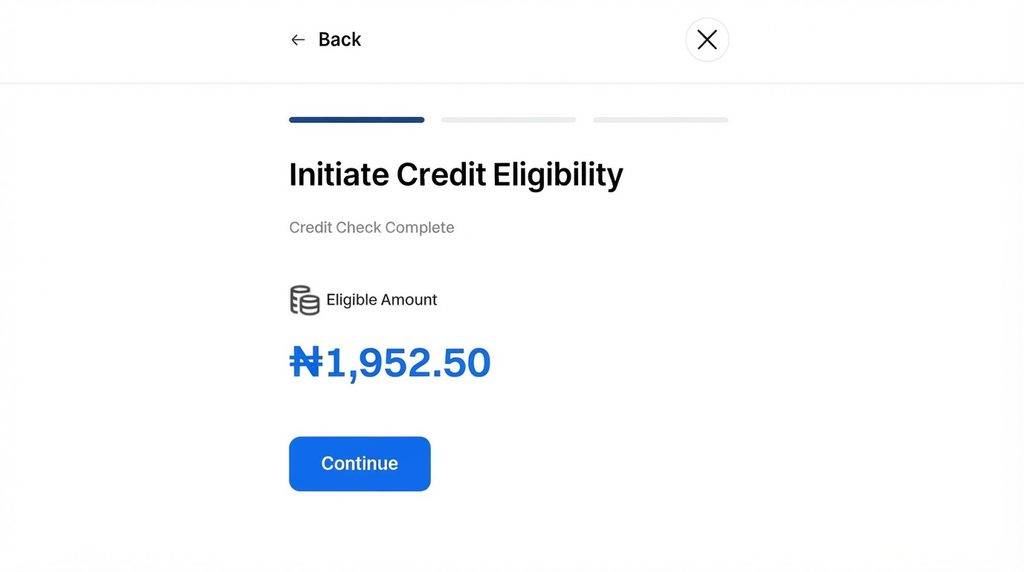
    EdPay school fees loan application for parents in Nigeria

    If this sounds like something worth exploring, you can learn more on the school fees financing for parents page.

    How Does a School Fees Loan Work?

    At a high level, the process is straightforward. You apply and provide your child’s and school’s details. Edubanc runs eligibility checks and verifies the school and fees information. Once approved, the school fees are paid directly to the school, and you begin repaying according to the schedule you agreed to.

    We won’t go too deep into the mechanics here since there’s already a dedicated guide that walks through how the EdPay school fees application works step by step, if you’d like the fuller picture.

    Can I Get a School Fees Loan If My Child’s School Isn’t Registered With the Lender?

    Yes, you can.

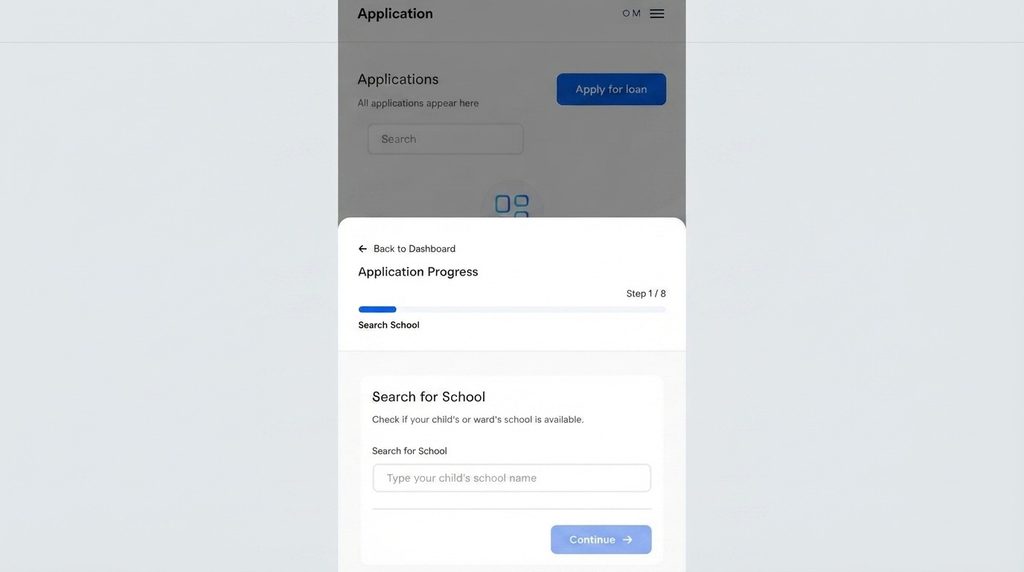
    A common worry among parents is that their child’s school needs to already be on a lender’s list before financing is even possible. With Edpay, that’s not a barrier. You can start your application even if your child’s school hasn’t been onboarded with Edubanc before. You simply provide the school’s information as part of your application, and the necessary verification is handled from there.

    In other words, an unfamiliar or newly listed school shouldn’t stop you from applying.

    School information section for EdPay school fees loan application

     Apply for Edpay tuition financing here 

    Paying School Fees for Two or More Children

    Here’s where the math gets heavier for a lot of households. One child’s fees might feel manageable on their own, but when two or three children resume around the same period, those individual amounts stack into a single, much larger lump sum.

    Picture a parent with three children, each owing a moderate amount in fees. Individually, each figure looks workable. Added together and due within days of each other, that total can rival a month’s rent or more.

    Planning ahead helps. Budgeting for the resumption period well before it arrives, prioritising which payments are most time sensitive, and being honest about what cash is actually available all go a long way. Where the combined school fees payment still outpaces what’s on hand, school fees financing becomes a practical way to cover the total upfront while spreading the school fees loan repayment across a period that suits the household.

    EdPay School Fees Financing vs Personal Loans: Which Makes More Sense?

    Both can get you to the same immediate goal, paying the school on time, but they’re built for different things.

    A personal loan is typically multipurpose. It can go toward fees, but it can just as easily go toward rent, a car repair, or anything else, and the lender generally isn’t structuring the product around education. Edpay, on the other hand, is purpose built for school related payments. The funds are directed specifically at the approved school fees, and the payment goes straight to the school rather than through the parent.

    A few points worth comparing:

    • Purpose. Personal loans serve general needs. Edpay is built specifically around school fees.
    • How funds are used. A personal loan gives you flexibility to spend as needed. Edpay is tied to the fees amount you applied for.
    • Payment to the school. With Edpay, the school is paid directly. With a personal loan, you typically pay the school yourself after receiving the funds.
    • Repayment structure. Both involve repayment over time, though terms vary by lender and product.
    • Convenience for school fees is needed specifically. Edpay removes the extra step of managing the payment yourself once the loan lands in your account.

    Neither option is universally cheaper or better. It comes down to your circumstances. That said, when the specific need is education fees, purpose built financing like Edpay tends to fit the situation more naturally than a general purpose loan. You can explore Edpay school fees financing to see if it fits yours.

    Looking for a Back-to-School Loan? What to Check Before You Apply

    If you’ve been searching for a back-to-school loan, a few things are worth reviewing before you submit any application, regardless of which lender you choose.

    • Amount required. Know the exact figure the school expects, not an estimate.
    • Repayment affordability. Be realistic about what you can comfortably repay each period without straining other expenses.
    • Bank statement and NIN. Most lenders will ask for these as part of verifying your identity and financial standing.
    • Eligibility. Check the lender’s basic requirements before applying, so there are no surprises.
    • School admin details and invoice for verification. Have your child’s school information and the fees invoice ready, since this speeds up verification.
    • Repayment period and terms. Understand how long you’ll be repaying and under what terms before you commit.

    Going in prepared makes the whole process faster and reduces the chances of delays once you apply.

    How to Apply for School Fees Financing With Edpay

    If school fees financing sounds like the right fit for your situation, applying is the next step.

    Apply for School Fees Financing

    School fees don’t have to become one overwhelming cash-flow moment, even when the full amount isn’t available right away. With a bit of planning, a realistic look at what you can afford, and a school fees financing option like EdPay when it makes sense, you can meet the payment on time without draining every other part of your budget.

    With Edpay

    Choose the repayment path that fits your household, and let your child’s resumption stay one less thing to worry about.

  • TOP 5 WAYS TO ACCESS EDUCATION FINANCING IN NIGERIA

    TOP 5 WAYS TO ACCESS EDUCATION FINANCING IN NIGERIA

    As flexible payment plans become the new norm for numerous reasons, more and more parents are adopting this system instead of scrambling to raise a lump sum every term. School fees don’t wait for payday, and not every parent has the full amount sitting ready. That’s exactly the gap these financing options exist to close.

    It’s become essential for every parent to weigh their options and decide which route works best for them, because every parent’s financial situation is different, and the method chosen needs to take that into account. From purpose-built ed-fintech platforms to bank advances, microfinance loans, and employer support, there’s no shortage of routes, but they don’t all work the same way, and some fit certain situations far better than others.

    So in today’s blog, we take a deep dive into several ways of accessing school fees loans, highlighting how each one works, their requirements, and their pros and cons. By the end of this read, you will be able to decide which one actually solves the problem best for you.

    1. Edpay: Education Finance Platform

    How it works: Edpay, the flagship product from Edubanc, is an education finance solution which provides financing to schools, teachers, professionals and parents. Parents/guardians can access easy school fees loan for tuition payment.

    Parents/guardians can get the school fees of their children/wards paid directly to the school in full upon successful application on the digital app. The low interest rate makes repayment easier to keep up with monthly over a period. In practice, the school gets paid upfront and the parent spreads the cost, currently over up to 9 months for full session loans, with money credited directly to the school once approved. Schools who onboard their schools on the platform can also request for loans up to 70 million and above to finance operational costs

    Requirements: To apply for tuition loan with Edubanc, one is required to provide the following: BVN, NIN, Utility Bill, Email Address, 1 Year bank statement valid identification, employment or income information, and other supporting documents requested during application.

     Pros

    • Money goes straight to the school, no risk of the loan being diverted
    • Loans of up to ₦2,000,000, priced at the lowest end of the market rather than a flat high rate. 
    • Repayment structured as simple monthly instalments that fit the income patterns of most salary earners.
    • No paper work. No collateral needed
    • Application is open to parents regardless of if their ward’s school is onboarded on the platform.
    • Also covers teachers working with partnered schools, who can access up to 90% of their earned salary, disbursed within minutes.

      Cons

    • Lower brand awareness than the big commercial banks, as a newer ed-fintech.
    People interacting with office staff at service desks inside a bright bank or customer service hall.

    2. Commercial Bank School Fees Advances (Sterling, Access, Wema)

    How it works: Several commercial banks offer school fees loans to parents, which are usually tied to their salary account. Some of the most popular options include Wema Bank, Access Bank, and Sterling Bank. Requirements and repayment models vary so it is important to consider them individually.

    • Wema Bank: Interest rate 3% per month (36% per annum), with repayment deducted monthly from your salary account, over a tenor of up to 3 months for nursery, primary and secondary school, and up to 12 months for tertiary institutions.
    • Access Bank: Interest rates average around 23% annually as of 2026, with disbursement often within 24 hours and repayment similarly deducted monthly from your salary account.
    • Sterling Bank (One Education): The repayment model also follows the standard bank pattern of monthly salary deductions once the fees advance is disbursed.

    Requirements: Wema requires a permanently employed salary earner with your salary domiciled in a Wema Bank account, or a self-employed individual with verifiable proof of income, plus an irrevocable letter of domiciliation from the employer and a valid ID. Access and Sterling follow a similar salary-domiciliation model.

    Pros

    • Large loan amounts, Wema goes between ₦50,000 and ₦10,000,000, and Access Bank’s product can reach ₦20 million for tuition. 
    • Fast disbursement, sometimes within 24 hours.

     Cons

    • Requires an existing salary or business relationship with that bank
    • Highest interest rates are common; for example, Wema’s 36% per annum, and the average is around 23% across other  banks
    • Often needs a co-signer or employer letter, adding friction for self-employed parents.

    3. Back-to- school loans with Microfinance Platforms eg Renmoney, O CasH, LAPO

    How it works: These lenders are faster and less collateral-heavy than banks, but pricing varies a lot by platform:

    • Renmoney: Its Education and Lifestyle loan is a collateral-free personal loan, charging 2.5% to 7.5% per month, with an APR of 30% to 90%, repaid over 3 to 24 months, mostly through the app or via USSD. Credit Nigeria + 2
    • LAPO Microfinance: Its School Fees Loan is designed to allow parents to spread tuition payments and prevent children from dropping out, capped at up to ₦200,000, priced between 3% and 5% monthly, disbursed and repaid through a group/union structure.
    • OKash: a general-purpose instant loan app rather than an education-specific one, charging 3% up to 15% monthly, or 36.5% to 360% APR, repaid over 91 to 365 days via debit card or bank transfer, with steep daily rollover fees if you miss a payment. 

    Requirements: Renmoney needs a BVN, verifiable income, a bank account, valid ID and a utility bill. LAPO requires school fee notification, a valid government ID, BVN, and a utility bill, plus union membership. OKash asks for little beyond being a Nigerian resident, 20-55 years old, with a source of monthly income.

    Pros

    • No collateral or guarantor needed on most of these.
    • Fast, largely digital application and disbursement.

    Cons

    • The most expensive category overall, especially OKash’s APR range.
    • Money isn’t tied to the school, so nothing stops it from being spent elsewhere.
    • Some apps are known for aggressive recovery tactics, including contacting your phone contacts over missed payments.
    Financial advisor discussing an online loan application on a laptop with a client.

    4. Employer-Backed Salary Advance for Education Loan

    How it works: Some employers offer staff an advance against future salary, specifically earmarked for school fees, either as a formal HR policy or an informal request approved case-by-case. The amount is usually deducted from subsequent paychecks over a few months.

    Requirements: This depends entirely on your employer’s internal policy,  typically a minimum tenure at the company, a formal request/approval process, and sometimes proof of the school fee invoice.

    Pros

    • Often interest-free or very low-interest since it’s not a commercial loan
    • No credit checks, paperwork with third parties, or bank domiciliation needed

    Cons

    • Entirely dependent on your employer having (or agreeing to) such a policy, which is not guaranteed.
    • Not available to the self-employed or business owners
    • Can complicate your relationship with HR/management if things go wrong, and there’s usually no formal recourse if a request is denied
    Friends shaking hands in a firm, smiling grip outdoors

    5. Family and Friends Loan

    How it works: This is the oldest, most informal option on the list — borrowing directly from relatives, close friends, or a trusted circle to cover school fees. There’s typically no fixed interest rate; most family and friends loans are given interest-free, though some may be structured with a small token amount as a show of goodwill. Repayment is flexible and negotiated verbally or informally, often in a lump sum whenever you’re able, or in small amounts over an agreed period, sometimes with no strict deadline at all.

    Requirements: No paperwork, credit checks, BVN, or collateral — just a relationship and enough trust for the other party to say yes. Some people put a simple informal agreement in writing (a text message or a signed note) to keep things clear, especially for larger amounts.

    Pros

    • Usually completely interest-free, the cheapest option of all
    • No credit checks, documentation, or formal approval process
    • Flexible, negotiable repayment that can bend around your situation

    Cons

    • Unreliable; depends entirely on someone in your circle having the funds and being willing to lend
    • Can strain relationships if repayment is delayed or expectations aren’t clearly set upfront.
    • No formal structure means misunderstandings are more likely without something in writing.

    Conclusion

    For the average parent trying to solve the “pay full fees now, repay later” problem, Edpay(Edubanc) comes out ahead. Commercial banks charge upward of 36% per annum and demand an existing salary relationship. Microfinance apps are easier to access but carry the steepest rates of all, up to 360% APR on some platforms. Employer advances are cheap when available, but very few parents can count on that option. Family and friends aren’t always a reliable source of financing.

    With its outstanding record of over ₦2.8 billion funded and a growing network of schools nationwide. Edpay stands out as the best choice. It’s the only option purpose-built end-to-end for school fees: money goes straight to the school so there’s no risk of misuse, pricing is kept at the lowest end of the market rather than a fixed high rate, and repayment is structured in simple monthly instalments that follow the academic calendar, not a generic loan cycle. It’s also the only option here that supports teachers as well as parents, making it the most complete and lowest-friction way to keep school fees from becoming a financial emergency every term.

    Thinking About Education Financing?

  • SCHOOL FEES IN NIGERIA: INSTALMENTAL UPFRONT PAYMENTS, THE NEW NORMAL

    SCHOOL FEES IN NIGERIA: INSTALMENTAL UPFRONT PAYMENTS, THE NEW NORMAL

    In a few months, another school session will begin, and the cycle will repeat. Thousands of parents across Nigeria will receive school fee invoices, many of them higher than the previous term. For many families, that moment brings more anxiety than excitement. Instead of thinking about books, uniforms and preparing children for a new term, parents begin calculating salaries, savings, business income and who they can borrow from if necessary.

    For a growing number of households, paying school fees in Nigeria has become one of the biggest financial commitments of the year. Inflation has increased the cost of nearly everything, while many salaries and business incomes have not kept pace. As a result, paying an entire term’s fees in one lump sum is becoming more difficult.

    This changing reality is quietly reshaping the education financing landscape in Nigeria. Flexible payment plans are no longer viewed as an alternative reserved for a few parents; they are becoming a practical solution that allows schools to receive their fees while giving families a payment structure that better reflects how they earn.

    Nigerian school students in uniform studying and writing in a classroom

    The Problem with the Lump-Sum Payment Model

    For decades, the traditional model assumed that parents would always have a large amount of money available when fees became due. In practice, that assumption no longer reflects reality. Medical emergencies, rent, transportation, food prices and unexpected family responsibilities often take priority.

    Business owners experience slow months, employees sometimes receive delayed salaries, and many households depending on multiple sources of income   that do not always arrive at the same time. Even financially responsible parents can struggle to produce one large payment on a fixed date.


    When upfront payment is the only option:

    • Parents borrow at high interest rates or rely on informal lenders.
    • Children may resume school late or stay at home until payments are completed.
    • Schools spend valuable time following up on outstanding balances instead of focusing on education.
    • Cash-flow challenges delay projects, maintenance and other operational needs.

    Ultimately, everyone loses. Parents experience unnecessary stress, students face disruptions to learning, and schools deal with financial uncertainty.

    Why Instalments Are Becoming the Norm

    Flexible payment plans recognise that while parents may not always have a large amount of money at once, many can comfortably manage smaller payments over time. Rather than forcing families into financial emergencies every term, upfront school fees loans with instalment payments help to spread the same amount across weeks or months. This approach mirrors how most people receive income and makes budgeting significantly easier.

    The benefits are clear:

    • It matches real monthly cash flow.
    • It keeps children in school without unnecessary interruptions.
    • It reduces financial pressure on families.
    • It provides schools with more predictable revenue quicker than they expected.

    Around the world, flexible payment options have transformed industries ranging from healthcare to housing. Education is gradually following the same path because it addresses a real and growing need.

    Nigerian mother making a school fees in nigeira payment online using her phone and bank card

    Why Schools Win with This Model

    Flexible payment plans are not just designed to help parents; they also strengthen schools financially and operationally.

    Full payment, no chasing:

    Schools receive the full tuition payment upfront. This removes the constant burden of reminders, part-payments and difficult conversations with parents.

     Predictable cash flow:

     Knowing that fees are available on time allows schools to plan salaries, purchase learning materials, maintain facilities and invest in improvements without unnecessary delays.

     Higher enrollment retention.

     Parents who may otherwise withdraw their children because of temporary financial challenges are able to keep them enrolled. Better retention means more stable revenue and stronger long-term planning for school owners.

    Most importantly, administrators spend less time chasing payments and more time improving educational quality.

    Nigerian school administrator reviewing school records and finances at a desk

    Why Parents Win with This Model

    Parents also benefit in meaningful ways.

    • Fees stop competing with salary timing.
    • Families avoid high-interest borrowing and unnecessary debt.
    • Better schools become accessible because payment timing is no longer the biggest obstacle.
    • School fees become another manageable monthly expense rather than a recurring financial emergency.

    The result is greater peace of mind. Parents can focus on supporting their children’s education instead of worrying about finding one large payment every term.

    The Bigger Picture

    The economic inflation across the country has created a gap between schools being constantly in need of funds to scale operationally and parents having it difficult while juggling multiple expenses during the school term. Flexible financing bridges that gap.

    Edpay by Edubanc was built around this simple idea. Schools receive their fees in full and on time, while parents repay gradually in instalments that match their income. Both sides benefit without compromising a child’s education.

    As more schools warm up to tuition loan for parents, the conversation shifts from simply collecting fees to creating a more sustainable education financing system. The long-term impact goes beyond convenience. Schools become financially stronger, parents gain flexibility, and students enjoy uninterrupted access to quality education.

    The future of education financing in Nigeria is unlikely to depend on larger lump-sum payments. Instead, it will increasingly be defined by payment models that recognise the financial realities of modern families. Upfront fee payments with flexible repayment plans are not just solving today’s challenges,they are setting a new standard for tomorrow.

    Thinking About Tuition Loan?

    Every child deserves uninterrupted access to quality education, and financial challenges shouldn’t stand in the way. 

  • Can You Borrow to Pay Tuition? Pros and Cons

    Can You Borrow to Pay Tuition? Pros and Cons

    Understanding Tuition Payment


    Tuition payment refers to the fees charged by schools, colleges, and universities for the education and services they provide. These fees cover instructional costs, use of facilities, examination fees, and sometimes additional academic support services. Tuition is a fundamental expense for students and their families, often representing a significant financial commitment.

    In Nigeria, the structure of tuition payment is somewhat unique compared to other countries. Many educational institutions require parents or guardians to pay tuition fees in installments, commonly three times within a single semester. This means that within a few months, parents are expected to make several substantial payments to keep their children enrolled and in good academic standing.

    This payment structure can be challenging because it demands consistent cash flow multiple times a year. For many families, especially those with limited or unpredictable income, this can create considerable financial pressure.

    The Financial Challenge for Parents
    Paying tuition multiple times a year can stretch family budgets thin. Many parents juggle various household expenses such as food, housing, transportation, healthcare, and other children’s needs alongside tuition fees. The economic environment in Nigeria, marked by inflation and job uncertainty, adds to the difficulty of meeting these repeated payment deadlines.

    As a result, some parents explore the option of borrowing money or taking loans to cover tuition fees. While this can provide immediate relief, it is important to weigh both the benefits and risks associated with borrowing for education.

    Pros of Borrowing to Pay Tuition

    • Access to Immediate Funds: Loans can provide the necessary money quickly, allowing parents to meet tuition deadlines on time and avoid penalties or withdrawal of their children from school.
    • Ensures Continuity of Education: Borrowing helps prevent disruption in a child’s academic journey. Missing tuition payments can lead to suspension or expulsion, so loans can be a tool to keep education ongoing.
    • Credit Building Opportunity: For parents who have limited credit history, responsibly managing a loan by making timely repayments can help build or improve their credit score, which may be useful for future financial needs.
    • Flexible Repayment Options: Some lending institutions offer flexible repayment plans tailored to a borrower’s income flow, making it easier to manage repayments without overwhelming financial strain.

    Cons of Borrowing to Pay Tuition

    • Interest and Additional Costs: Loans typically come with interest rates and sometimes processing fees, increasing the total amount paid back compared to the initial borrowed sum. This can add financial burden over time.
    • Debt Accumulation: Regular borrowing without adequate repayment can lead to mounting debt, which can spiral into financial stress and impact the family’s overall economic stability.
    • Risk of Overextending Finances: Without careful planning and budgeting, parents may borrow more than they can afford to repay, leading to defaults, penalties, and potential damage to creditworthiness.
    • Emotional and Psychological Stress: The pressure of managing debt and monthly repayments can cause anxiety and stress, affecting family well-being.

    Final Advice for Parents


    Taking loans to pay tuition fees is not a decision to be taken lightly, but it is not inherently negative either. When done responsibly, borrowing can provide a valuable solution to meet tuition obligations without disrupting your child’s education.

    Parents should carefully evaluate their financial situation before borrowing. This includes considering their monthly salary, other income sources, existing debts, and regular household expenses. Borrow only what you are confident you can repay within the agreed time frame to avoid unnecessary financial hardship.

    Remember, the goal is to support your child’s education while maintaining your family’s financial health. Responsible borrowing, combined with good budgeting and financial planning, can make this balance achievable.

    Need a tuition loan?

    Edubanc offers flexible payment options for up to ₦2,000,000 in tuition, salary, and exam fees.