
Tag: education

  • 10 Financial Mistakes School Owners Make—and How to Avoid Them

    10 Financial Mistakes School Owners Make—and How to Avoid Them

    Running a successful school takes more than delivering quality education. Behind every thriving institution is a strong financial system that keeps operations running smoothly, staff motivated, and students learning without disruption.

    Yet, many schools struggle financially, not because they lack students, but because of avoidable financial mistakes.

    Whether you own a nursery, primary, secondary school, or college, avoiding these common pitfalls can improve your school’s financial stability and position it for sustainable growth.

    Here’s what every school owner should know.

    1. Relying Solely on School Fees

    Many schools depend entirely on tuition payments as their only source of income. When parents delay payments, the entire school’s operations can suffer.

    This often leads to:

    • Salary delays
    • Unpaid vendors
    • Postponed maintenance
    • Interrupted learning activities
    What to do instead

    Diversify your revenue by introducing services such as:

    • Holiday classes
    • After-school programs
    • Extracurricular clubs
    • Facility rentals
    • School merchandise
    • Fixed Income Investment 

    Having multiple income streams provides greater financial stability throughout the year.

    2. Operating Without a Budget

    Operating without a budget
    Operating without a budget


    One of the biggest mistakes schools make is spending without a structured annual budget.

    Without a budget, it’s difficult to know:

    • How much you’re earning
    • Where your money goes
    • Which expenses are unnecessary
    • Whether you’re operating profitably
    Best practice

    Create an annual budget before every academic session and review it monthly.

    Include:

    • Payroll
    • Utilities
    • Learning materials
    • Facility maintenance
    • Marketing
    • Emergency expenses
    • Technology investments

    3. Poor Cash Flow Management

    A profitable school can still experience financial problems if cash isn’t available when needed. Late tuition payments often create cash flow gaps that affect daily operations.

    Signs of poor cash flow include:
    • Delayed salaries
    • Outstanding supplier payments
    • Constant borrowing
    • Deferred repairs
    Solution

    Improve fee collection policies and consider tuition financing solutions that allow schools to receive payments upfront while giving parents flexible repayment options.

    Without proper records, it’s nearly impossible to:

    • Measure profitability
    • Prepare for audits
    • Make informed decisions
    • Plan for growth

    Invest in accounting software Financial software or work with a qualified financial advisor  to maintain accurate records throughout the year.

    5. Underpricing or Overpricing School Fees

    Setting tuition without reviewing operating costs can hurt your school. Charging too little reduces profitability.

    Charging too much without delivering additional value may reduce enrollment. Instead, review your fees annually based on:

    • Inflation
    • Staff salaries
    • Operational costs
    • Market demand
    • Competitor analysis
    • Location

    6. Delaying Investment in Technology

    Financial risk in school -Delaying in investment in technology
    Delaying in investment in technology

    Many schools still rely heavily on manual processes. This often leads to:

    • Administrative errors
    • Lost records
    • Slow communication
    • Inefficient fee tracking

    Technology can simplify:

    • Attendance
    • Payroll
    • Finance
    • Parent communication
    • Student records

    Investing in the right education software tools like Educare saves time and improves efficiency.

    7. Not Preparing for Emergencies

    Unexpected expenses happen.

    Examples include:

    • Building repairs
    • Equipment replacement
    • Health emergencies
    • Regulatory requirements

    Without an emergency reserve, schools may struggle to respond quickly.

    Aim to maintain an emergency fund that covers at least three months of operating expenses.

    8. Delaying Staff Salaries

    Teachers are the backbone of every school.

    Consistently delaying salaries lowers morale, increases staff turnover, and negatively affects learning outcomes.

    Prioritize payroll in your financial planning to retain quality educators.

    9. Neglecting Marketing and Student Enrollment

    Many school owners assume word-of-mouth alone is enough.

    However, attracting new families requires continuous visibility.

    Allocate part of your annual budget to:

    • Social media marketing
    • Community events
    • Open days
    • Website improvements
    • Parent referral programs

    A steady enrollment pipeline strengthens your financial position.

    10. Making Financial Decisions Without Data

    Good financial decisions rely on facts not assumptions.

    Track key metrics such as:

    • Student enrollment trends
    • Tuition collection rates
    • Monthly revenue
    • Operating expenses
    • Staff costs
    • Profit margins
    Good financial decisions rely on facts not assumption
    Good financial decisions rely on facts not assumption

    Reviewing these figures regularly helps you identify issues before they become major problems.

    Final Thoughts

    Financial success doesn’t happen by chance. It comes from careful planning, disciplined budgeting, and making informed decisions.

    By avoiding these common mistakes, school owners can improve cash flow, support their staff, deliver better learning experiences, and build institutions that thrive for years to come.

    A financially healthy school is better equipped to invest in quality education, attract more students, and create lasting impact.

    At Edubanc, we support schools with tailored financial advisory services that help school owners strengthen their financial management practices and make informed growth decisions. We also provide access to urgent school financing solutions designed to help schools cover operational expenses, manage overhead costs, and maintain smooth day-to-day operations without disrupting learning activities.

    Do you need financial advisory or support ?

    Contact the EDUBANC team today to learn how we can help your school achieve greater financial stability and long term success

  • Nigeria’s Hidden Talent: The Need to Invest in Intelligence Uprising

    Nigeria’s Hidden Talent: The Need to Invest in Intelligence Uprising

    Every now and then, a story emerges that reminds us of what Nigerians are truly capable of.

    Amidst the Olodo Uprising” conversation dominating social media today, perhaps there is another uprising that deserves even more attention, an intelligence uprising.

    While timelines amplify entertainment, another movement is quietly unfolding across Nigeria.

    In classrooms, science labs, and academic competitions, young Nigerians continue to prove they can compete with, and outperform the very best in the world.

    This is the uprising we should be talking about. This is the uprising we should be promoting.

    Nigeria has never lacked brilliant minds. What the country has often lacked is access to education and promoting intelligence uprising in a way that allow those talents to flourish.

    Recently we celebrated the newly qualified ICAN chartered accountant, Osasere, another young Nigerian whose achievement reminded us of the value of investing in education

    That reality was once again on display at the International STEM Olympiad in Rome, Italy, where several young Nigerians delivered remarkable performances on the global stage.

    Among them was Onyedikachi Egejurum, who reportedly won a Gold Medal and emerged as the world’s best in the Primary Mathematics category. Chimdiebube Onwubiko also returned home with Gold in the Junior Secondary category, while Don Anele Munachimso won two Gold Medals, earning recognition as the world’s best in both Mathematics and Science in his category.

    Let’s celebrate these young champions. They are proof of what can happen when potential is recognised, nurtured, and supported.

    But here’s the bigger story.

    Across Nigeria, there are children with extraordinary abilities in mathematics, science, technology, the arts, and beyond.

    The challenge is not discovering talent; it is creating the environment where that talent can thrive. Expanding access to education is one of the most important ways to help these children realise their potential

    Behind these achievements was more than intelligence.

    They required preparation, mentorship, quality teaching, exposure, and perhaps most importantly, people who were willing to invest in these children’s futures.

    One of those people is education advocate Alex Onyia, Founder and CEO of Educare, who sponsored the students’ participation at the International STEM Olympiad.

    Reflecting on the results, he wrote:

    “Investing in these children was worth it.”

    These students didn’t win their medals by luck.They were the result of intentional investment.

    Every investment in a child’s education has the potential to produce outcomes far beyond the classroom. It can create innovators, scientists, engineers, entrepreneurs, researchers, and global champions who inspire an entire nation.

    The stories we celebrate shape the future we build and the values we reward. If we want more innovation and scientific breakthroughs, we must give the same attention to students who make Nigeria proud through excellence.

    Unfortunately, financial barriers still prevent many talented children from reaching their full potential. Many families struggle to afford quality education, learning resources, and academic competitions.

    This is why investing and expanding access to education must remain a national priority.

    One practical way to bridge this gap is through education loans that improve access to education. Flexible education financing helps families keep children in school, access better learning opportunities, and develop their talents without unnecessary financial barriers.

    Every child deserves the opportunity to learn, grow, and excel. By providing education loans to improve access to education, we help families invest in what matters most, the future of their children. Because when education becomes accessible, talent has the opportunity to shine.

    The medals won in Rome are more than trophies.

    They are proof that when Nigeria invests in and nurtures young talent, the returns are global.

    The intelligence is already here.

    Now, we must invest in the opportunity.

    Want us to share your story?

    We partner with schools to finance education at all stages.

  • How Edpay Works: Step-by-Step Guide for Parents

    How Edpay Works: Step-by-Step Guide for Parents

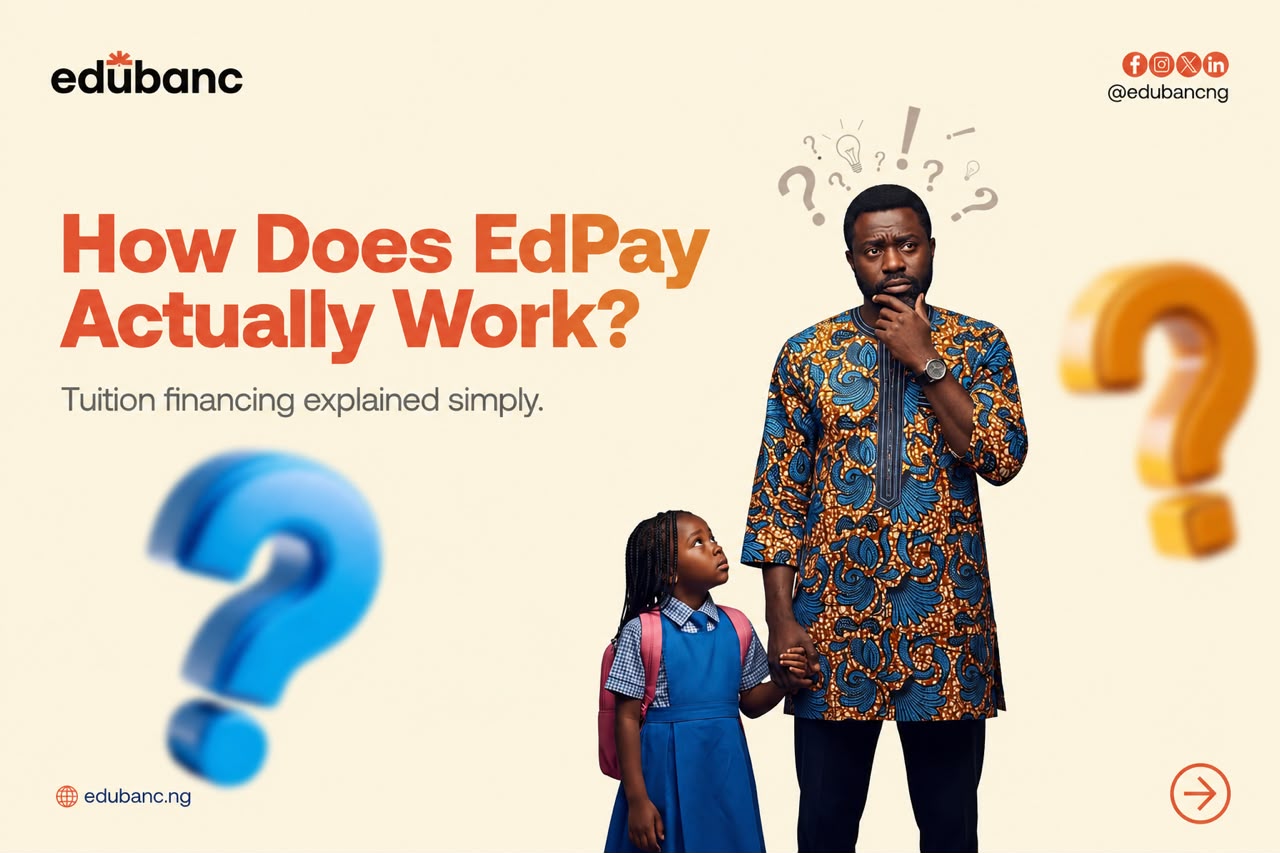
    For many parents, paying school fees can be one of the biggest financial challenges of the academic year. Rising tuition costs, multiple household expenses, and unexpected emergencies can make it difficult to pay large school fees upfront.

    That’s where EdPay by Edubanc comes in.

    EdPay is designed to help parents spread school fee payments into affordable installments, reducing financial pressure while ensuring children continue their education without interruption.

    In this guide, we’ll explain exactly how EdPay works and how parents can get started.

    What Is EdPay?

    EdPay  is a flexible school fee financing solution powered by Edubanc that enables parents to pay school fees over time instead of making a single lump-sum payment.

    Rather than worrying about meeting tuition deadlines with one large payment, parents can access a structured repayment plan that fits their budget.

    The goal is simple: make quality education more accessible and affordable for families.

    Why Parents Need Flexible School Fee Payments

    School fees often come at the same time as other major financial responsibilities such as:

    • Rent
    • Utility bills
    • Transportation costs
    • Food and household expenses
    • Medical bills

    When all these expenses compete for attention, paying school fees can become overwhelming.

    EdPay helps bridge this gap by giving parents greater financial flexibility and peace of mind.

    How EdPay Works (Step-by-Step)

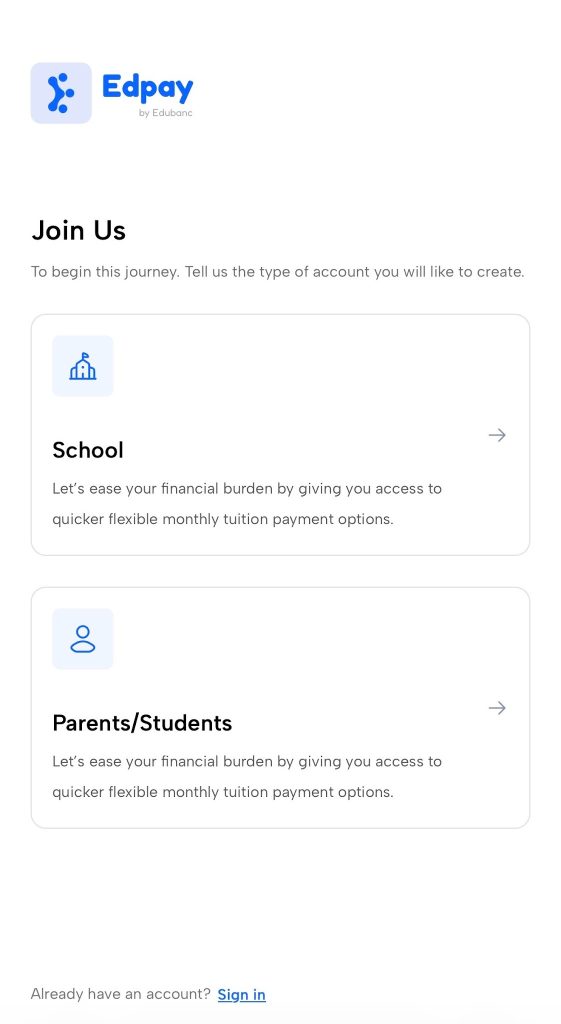
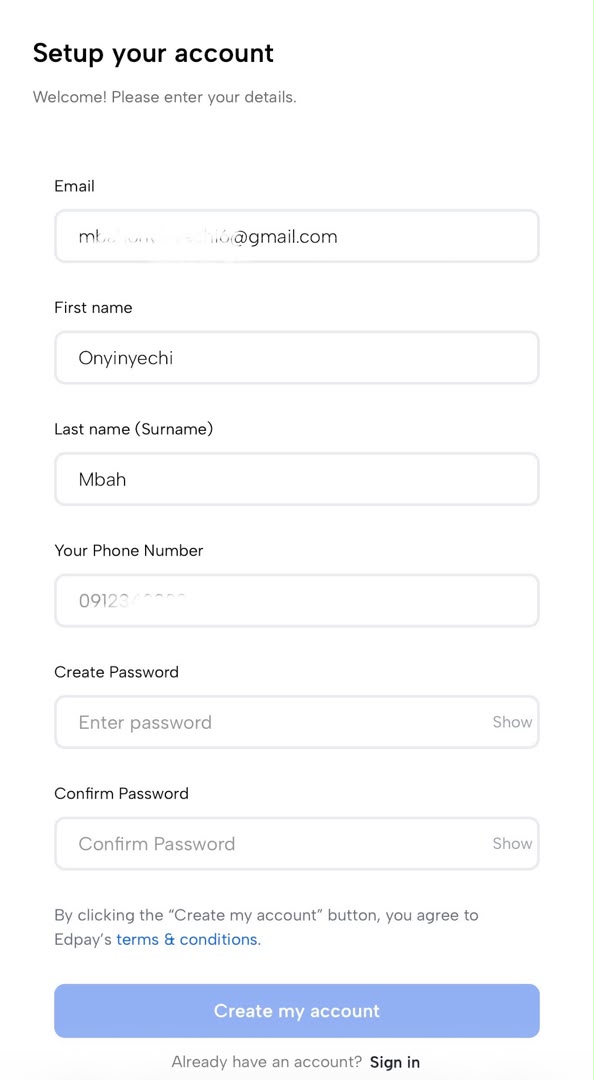
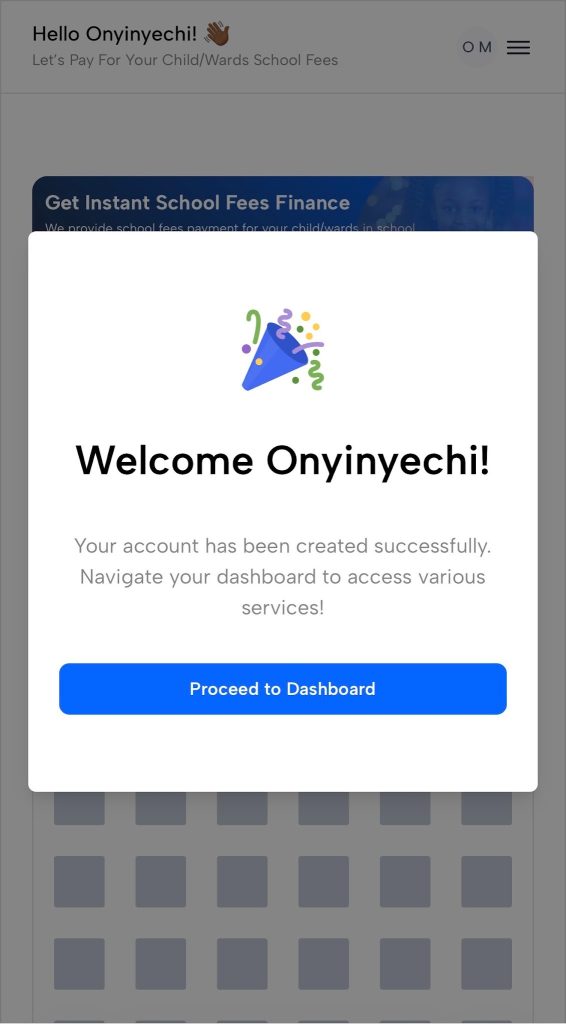
    Step 1: Create an Edpay Account

    The first step is to register on the Edpay platform.

    You’ll need to provide basic information such as:

    • Full name
    • Email address
    • Phone number
    • Identification detail
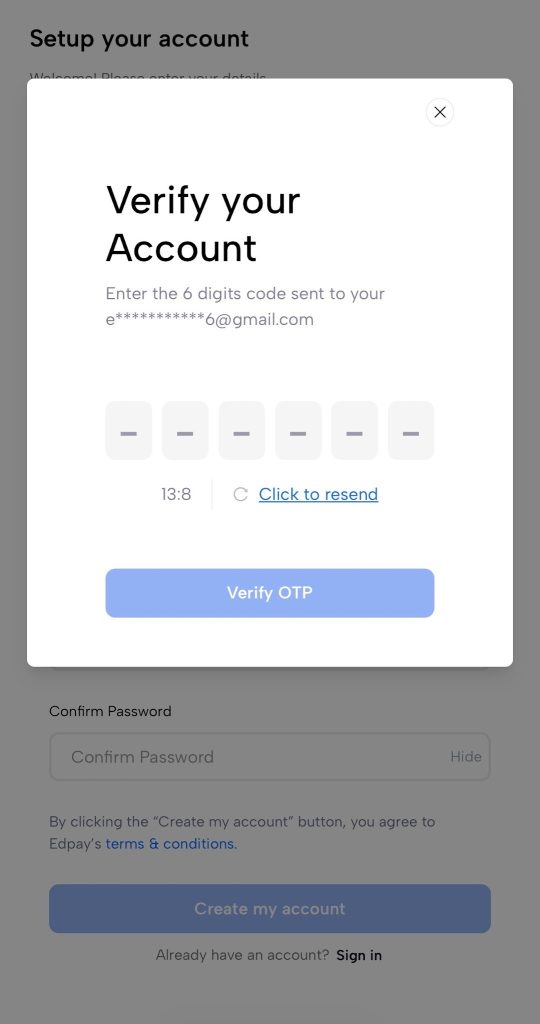
    Account Setup

    A verification code would be sent to your email upon creation 

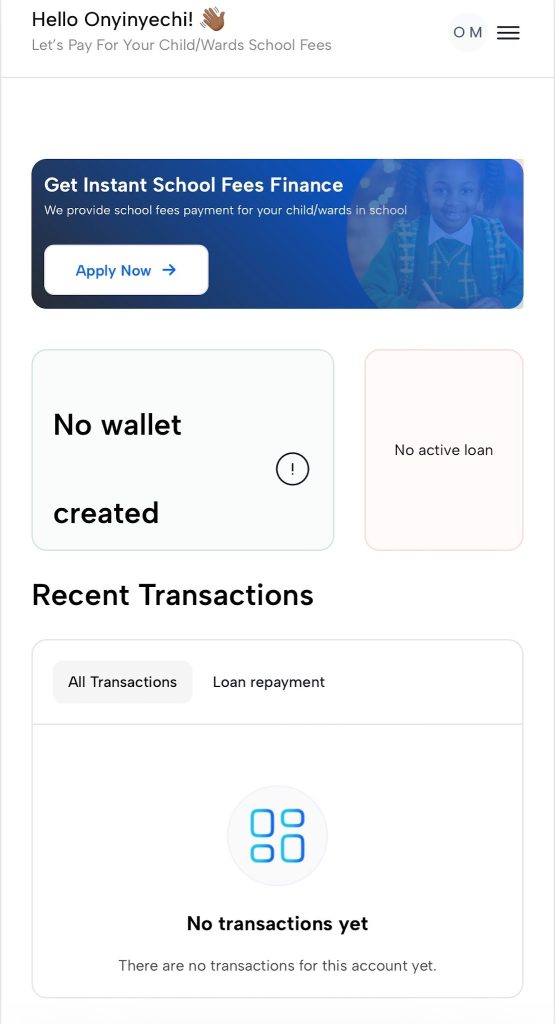
    Once your account is created, you’ll gain access to your personalized dashboard.

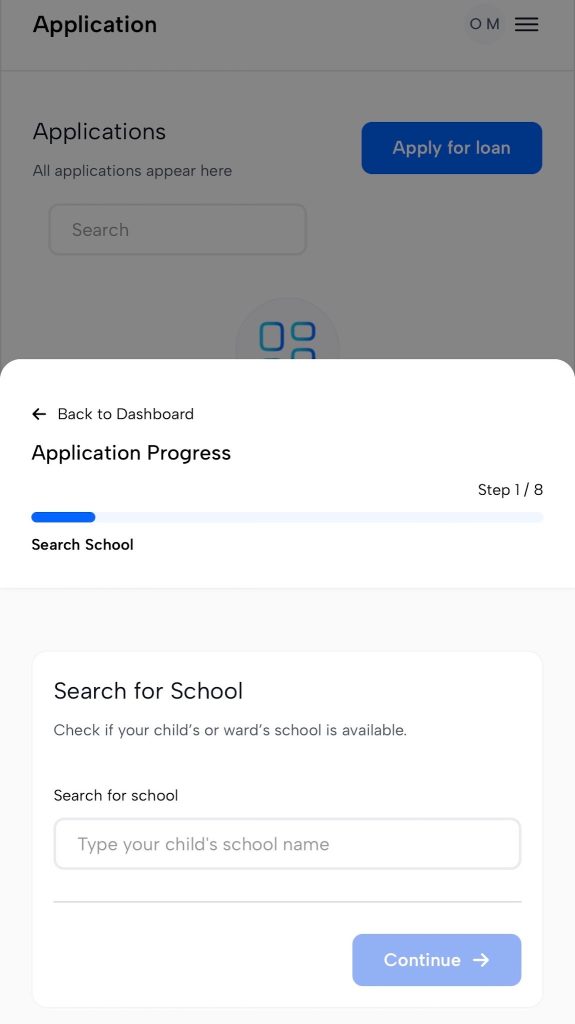
    Step 2: Add Your Child’s School Information

    After registration, provide your child’s academic details, including:

    • School name
    • Student name
    • Class or grade level
    • School fee amount

    This information helps Edubanc process your financing request efficiently. If you can’t find your school in our platform, there’s an option to put in the school’s details, so we can reach out. 

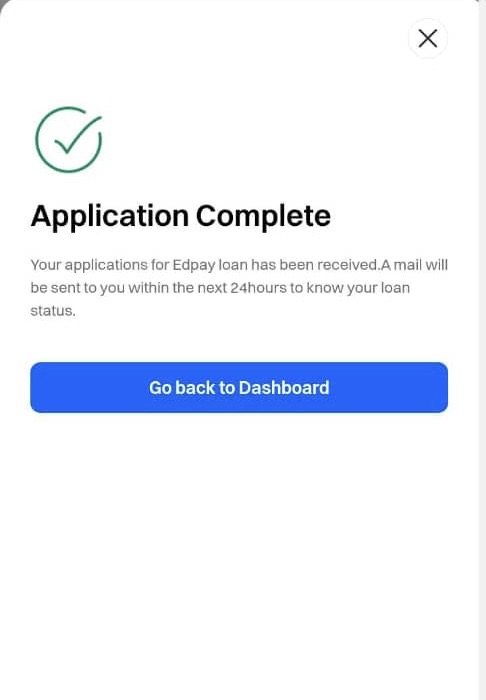
    Step 3: Apply for tuition financing on EdPay

    Next, submit your application for school fee financing through the platform.

    The process is designed to be simple, fast, and entirely digital.

    You may be asked to provide supporting documents to verify your information.

    Step 4: Application Review and Approval

    Once your application is submitted, Edubanc reviews your information to determine eligibility.

    During this stage, factors such as:

    • Personal Verification details
    • Financial information
    • Credibility Check
    • Application completion may be assessed.
    • If approved, you’ll receive details of your repayment plan.

    Step 5: School Fees Are Paid

    After approval, Edubanc pays the approved school fees directly to your child’s school.

    This allows your child to continue attending classes while you repay according to your agreed schedule.

    Step 6: Repay in Convenient Installments

    Instead of making one large payment, you’ll repay the financed amount in smaller, manageable installments.

    Through your Edubanc dashboard, you can:

    • Track repayments
    • View payment schedules
    • Monitor outstanding balances
    • Stay informed about upcoming payments

    Benefits of Using EdPay

    1. Affordable Monthly Payments

    Break down large school fees into smaller payments that are easier to manage.

    2. Reduced Financial Stress

    Avoid the pressure of sourcing a large amount of money before every school term.

    3. Quick Application Process

    The application process is streamlined to save parents time and effort.

    4. Continuous Learning for Children

    Ensure your child remains focused on learning without disruptions caused by unpaid school fees.

    5. Better Financial Planning

    Flexible payment schedules make it easier to manage household finances while investing in your child’s education.

    Tips for a Successful EdPay Application

    To improve your experience:

    • Apply before school fee deadlines.
    • Ensure all information submitted is accurate.
    • Upload required documents promptly.
    • Monitor your repayment schedule regularly.
    • Contact support if you need assistance.

    Why Families Trust Edubanc

    Edubanc is committed to helping families access quality education through innovative financial solutions.

    By combining technology with flexible financing, Edubanc empowers parents to make educational investments without unnecessary financial strain

    Frequently Asked Questions (FAQs)

    What is EdPay?

    EdPay is a school fee financing solution that allows parents to pay tuition fees in installments instead of making a full upfront payment.

    Who can apply for EdPay?

    Parents and guardians seeking flexible payment options for school fees can apply, subject to eligibility requirements.

    How long does the application process take?

    Application typically can be done in a day. However, disbursement timelines may vary depending on verification requirements and documentation submitted. 

    Does EdPay pay the school directly?

    Yes. Once approved, Edubanc pays the approved school fees directly to the school. If your child’s school is not partnered with Edubac, we can always reach out on your behalf. 

    Can I track my repayments?

    Yes. Parents can monitor payment schedules, repayment history, and outstanding balances through their Edubanc dashboard.

    Why should I use EdPay?

    EdPay helps reduce financial pressure, improves budgeting, and ensures children can continue their education without interruptions.

    Final Thoughts

    Education is one of the most important investments parents make for their children. However, managing school fees shouldn’t create unnecessary stress.

    With EdPay, parents gain access to a smarter and more flexible way to finance education. By spreading school fees into manageable instalments, families can focus on what matters most, helping their children succeed.

  • Nigeria’s Youngest Chartered Accountant Is Just 16.

    Nigeria’s Youngest Chartered Accountant Is Just 16.

    How Osasere Okundaye’s achievement reveals why access to education matters more than ever.

    When 16-year-old Osasere Okundaye became Nigeria’s youngest chartered accountant after qualifying through ICAN, she didn’t just surpass the previous record set in 2022 by Jonathan Adewale, who became a chartered accountant at the age of 17; she reminded us what becomes possible when talent meets opportunity. 

    Her achievement, recognised by the Federal Government and celebrated nationwide, is a powerful testament to discipline, resilience, and the value of investing in education.

    But while everyone applauds the result, there’s another conversation we need to have.

    How many more Osaseres never get the opportunity?

    Talent is evenly distributed. Opportunity isn’t.

    Across Nigeria are thousands of brilliant young people with the intelligence, curiosity and work ethic to excel.

    Some dream of becoming accountants. Others aspire to be doctors, engineers, architects, lawyers, data scientists or entrepreneurs.

    Yet for many of them, the greatest obstacle isn’t capability. It’s affordability.

    Professional certifications, school tuition, examination fees and learning resources continue to become more expensive every year.

    Sometimes, the difference between potential and success is simply whether someone can afford to pay.

    The cost of waiting

    Many professionals postpone certification because they cannot afford the upfront fees.

    Students defer admission. Parents struggle to keep children in school. Dreams are delayed, not because ambition is lacking, but because finances don’t align with opportunity.

    Unfortunately, talent doesn’t pause while people save money.

    Every delayed opportunity represents lost innovation, reduced productivity and unrealised potential.

    Education shouldn’t be a privilege for the few

    At Edubanc, we believe education is one of the highest-return investments anyone can make.

    Whether it’s K-12 tuition, university, an MBA, ICAN, ACCA, PMP, CFA, or other professional certifications, access to education shouldn’t depend solely on immediate cash flow.

    Financial flexibility allows people to pursue opportunities when they arise, not years later when the moment has passed.

    Because timing matters.

    Behind every success story is a support system

    Osasere’s achievement didn’t happen in isolation.

    Behind every exceptional learner is usually a network of parents, mentors, teachers, institutions and people willing to invest in potential.

    As a country, we need to become that support system more intentionally.

    Not only by celebrating excellence after it happens, but by making excellence possible before it happens.

    Investing in potential

    At Edubanc, we don’t just finance education. We invest in possibility.

    Every tuition payment, every education loan and every flexible payment plan is ultimately an investment in someone’s future story.

    Perhaps the next youngest chartered accountant, the next groundbreaking engineer, the next founder building solutions for Africa or simply someone whose life changes because they didn’t have to abandon their education due to financial constraints.

    Celebrating excellence is important; creating more opportunities for excellence is even more important. Because the next prodigy may already be studying today. The question is:

    Will financial barriers stand in the way, or will we build systems that help talent thrive?

    For Further Reading

  • The Rising Cost of Learning: A Deep Dive into Nigeria’s Education Financing Gap

    The Rising Cost of Learning: A Deep Dive into Nigeria’s Education Financing Gap

    Secondary students in an exam scholl supervised by thier teacher in classroom.

    Education is often called the backbone of a nation’s future, yet in Nigeria, that backbone is under tremendous strain. The rising cost of education has become a pressing concern, casting a long shadow over the dreams of millions of Nigerian students and their families. This blog post takes a close look at the widening education financing gap in Nigeria, exploring the causes, impacts, and possible pathways forward.

    Let’s start by setting the scene: Nigeria’s population is young and growing rapidly, making education more important than ever. But as demand for quality education soars, the financial resources to support it have not kept pace. The result? A gap that is pushing the cost of learning out of reach for many.

    Why Is the Cost of Learning Rising?

    Several factors contribute to the escalating costs of education in Nigeria. Public funding for schools has struggled to keep up with increasing enrollment figures. Infrastructure is ageing, often inadequate, and requires significant investment to improve. Meanwhile, inflation and economic instability have driven up costs for everything from textbooks to school uniforms and transportation.

    Another critical factor is the limited availability of affordable private education options and scholarship programs. Many families are left scrambling to cover tuition fees and other hidden costs, which continue to rise without a corresponding increase in household incomes.

    The Financing Gap: What Does It Mean?

    The education financing gap refers to the shortfall between the funds needed to provide quality education and the actual financial resources available. In Nigeria, this gap is wide and growing. According to various reports and education experts, billions of naira are needed annually just to bridge the divide and ensure all children have access to basic and higher education.

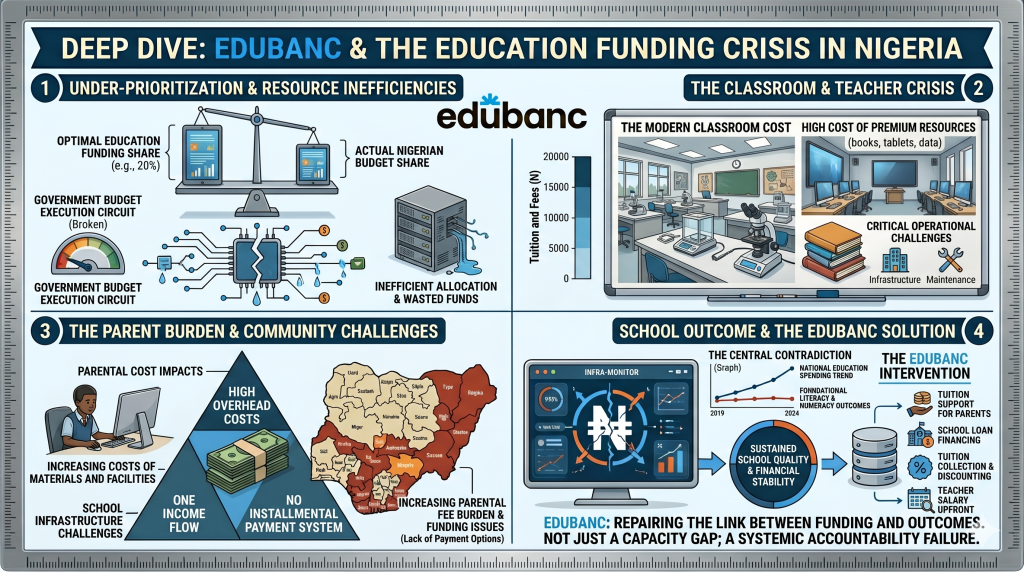
    Edubanc and the education funding crisis in Nigeria.

    This financing gap has a ripple effect. It contributes to overcrowded classrooms, poorly paid teachers, and a lack of essential learning materials. In turn, these conditions undermine the quality of education, affecting student performance and future opportunities.

    Who Bears the Brunt?

    Unsurprisingly, the most vulnerable are children from middle to low-income families and rural areas, who suffer the most. When costs rise, many families are forced to make difficult choices, sometimes pulling children out of school or reducing educational spending on essentials. Girls, in particular, are disproportionately affected, with increased dropout rates due to financial pressures.

    On a broader scale, this financing gap threatens national development. Nigeria’s workforce of tomorrow depends on the skills and knowledge acquired today. Without adequate investment in education, the country risks stalling its economic growth and social progress.

    The Burden on Parents 

    While much of the focus on Nigeria’s education financing gap centres on public education, it’s crucial to recognise that parents who send their children to private schools are also significantly impacted. Private schools, often seen as a refuge for quality education amid challenges in the public system, are facing their own financial pressures. As the economy fluctuates and inflation rises, these schools increase their fees to cover operational costs, staff salaries, and facility maintenance.

    For many families, this means a continuous struggle to meet growing tuition bills. The burden on parents intensifies as they try to balance household expenses with the escalating costs of private education. In some cases, families are forced to make painful decisions, such as withdrawing children from school or taking on debt to keep up with payments.

    This cycle reflects how the broader economic environment fuels the education financing gap. It underscores the need for comprehensive solutions that address both public and private education sectors, ensuring affordability and sustainability for all families striving to provide the best possible learning opportunities for their children.

    The Burden on Private Schools

    Private schools in Nigeria face significant financial and operational challenges that are often overlooked in discussions about the education financing gap. Despite being seen as alternatives to the public education system, many private institutions struggle to maintain quality amid rising costs driven by the broader economic environment.

    Operational expenses such as staff salaries, facility maintenance, utilities, and educational materials have all increased substantially due to inflation and economic instability. Many private schools operate on tight budgets and rely heavily on tuition fees as their primary revenue source. When families experience financial difficulties and delay or default on payments, private schools face cash flow problems that affect their ability to function effectively.

    Additionally, private schools must continuously invest in infrastructure, technology, and teacher training to meet growing expectations and regulatory requirements. This need for ongoing investment adds pressure to already stretched financial resources. Some schools are forced to increase fees regularly to keep up, but doing so risks pricing out families and reducing enrollment.

    In essence, private schools are caught in a challenging cycle: they must raise fees to cover rising costs but risk losing students if fees become unaffordable. This dynamic threatens the sustainability and quality of private education in Nigeria, underscoring the importance of targeted support and innovative financing solutions for these institutions.

    Charting a Way Forward

    Closing Nigeria’s education financing gap is not just a policy challenge; it’s a moral imperative. The cost of learning must not price out the dreams of millions of young Nigerians eager to learn and contribute to their society. With concerted effort from the government, the private sector, communities, and international partners, it’s possible to build a more equitable, accessible, and high-quality education system.

    Companies like Edubanc are stepping up to bridge this gap by offering tailored school fees loan solutions to schools, parents, and students. Whether it’s helping schools improve infrastructure, supporting parents in managing tuition fees, or enabling students to take important exams, Edubanc is playing a vital role in making education more affordable and accessible for all.

    Thank you for joining me on this deep dive into one of Nigeria’s most urgent challenges. Next week, we’ll explore innovative education technologies that are reshaping learning experiences across Africa. 

    Need help with Financing?

    Our goal is to improve educational quality, support schools, parents, and reduce the no of out-of-school children in Nigeria by providing stability in school fees payment, and sustainable education intervention.