
Tag: parents

  • School Fees Loan in Nigeria: What Parents Should Know

    School Fees Loan in Nigeria: What Parents Should Know

    School resumption always seems to bring a fee invoice attached to it, and for many Nigerian parents, that invoice doesn’t wait for a convenient payday. Rent, transport, feeding, and other household expenses tend to land in the same stretch of the calendar, which makes raising a lump sum for tuition one of the harder financial moments of the term. A school fees loan can bridge that gap, but not every loan is built the same way, and the terms you agree to can make the difference between a helpful solution and a financial headache down the line. Before you sign up for one, here’s a practical checklist to work through.

    Why Parents Are Turning to School Fees Loans

    Rising tuition, inflation, and unpredictable income have made lump-sum payments harder to manage every term. Many schools in Nigeria still expect payment in full at the start of the session, even though household income doesn’t always arrive in one convenient sum. That mismatch is pushing more parents toward financing instead of scrambling to raise the full amount at once, a shift we’ve written about in How to Pay School Fees When You Don’t Have the Full Amount at Once.

    Borrowing for tuition isn’t inherently risky. It only becomes a problem when it’s taken quickly, without reading the fine print, or without a clear plan for repayment. Understanding what to look out for beforehand puts you back in control of the decision.

    The Different Ways Parents Borrow for School Fees

    Before getting into what to check, it helps to know the general options available. Some parents turn to traditional banks, which often require collateral or a long-standing relationship with the institution. Others rely on cooperative societies through their workplace, which can offer lower interest but usually move slower and depend on how much has been contributed over time. A growing number are turning to fintech platforms and education-focused lenders, which tend to offer faster approval and repayment plans built specifically around school terms rather than generic loan cycles. Each route has its place, but the checklist below applies no matter which one you’re considering.

    What to Check Before You Take a School Fees Loan

    1. The interest rate and the total repayment amount
    Don’t just look at the monthly figure. Ask the lender to break down exactly how much you’ll repay in total, including interest, so you know the real cost of borrowing before you commit. A loan that looks affordable monthly can still add up to a lot more than the original fee by the time it’s fully repaid.

    2. Processing fees and other hidden charges
    Some lenders add administrative or processing fees on top of interest, and these aren’t always advertised clearly upfront. Request a full list of charges before signing anything, so there are no surprises once repayment begins.

    3. Repayment schedule versus your income pattern
    A loan that expects repayment on the 5th of every month won’t work well if your salary lands on the 25th. Match the repayment date and frequency to when money actually comes in, rather than accepting whatever schedule the lender defaults to. This one detail is often the difference between a loan that feels manageable and one that puts you under constant pressure.

    4. Loan tenure versus the school calendar
    Check whether the loan term is structured around the term or session you’re paying for, or whether it stretches well beyond it. A mismatch here can mean you’re still repaying one loan long after the term has ended, with a new fee invoice already due, effectively stacking two obligations on top of each other.

    5. How much you actually need versus how much you’re offered
    It can be tempting to take the maximum amount available, especially if the approval process makes it easy to do so. Borrowing more than the fee itself only adds unnecessary interest on money you didn’t need in the first place. Borrow to the exact amount required, and treat any extra offer as something to decline rather than accept.

    6. What happens if you’re late
    Ask about penalties for missed or late payments, and whether there’s a grace period built in. Life happens, and income doesn’t always arrive exactly on schedule. Understanding this in advance helps you plan around an unexpected month rather than being caught off guard by a penalty you didn’t know existed.

    7. The lender’s reputation and transparency
    Work with lenders who are upfront about their terms and easy to reach if something changes. Look for reviews, ask other parents who’ve used the service, and pay attention to how clearly the lender communicates before you’ve even signed up. If a lender is vague about costs at this stage, that’s usually a sign of what’s to come. For a sense of what responsible borrowing looks like in practice, our earlier piece on Can You Borrow to Pay Tuition? Pros and Cons is a useful companion read.

    8. Whether the loan fits your bigger financial picture
    A school fees loan shouldn’t be evaluated in isolation. Consider your existing debts, other upcoming expenses, and whether this term’s loan will affect your ability to comfortably pay the next one. Financing one term at the cost of struggling through the next isn’t a solution, it’s a delay.

    A Simple Way to Think About It

    Treat a school fees loan the way you’d treat any other significant financial commitment. Ask what it costs in total, when it’s due, and what happens if plans change. Write the answers down if you need to, and compare more than one lender before deciding. If you’re weighing options beyond loans altogether, our roundup of Top 5 Ways to Access Education Financing in Nigeria covers alternatives worth considering too, from instalmental payment plans to school-partnered financing.

    Taking a loan for school fees isn’t a decision to make in a hurry, but with the right checks in place, it can keep your child’s education on track without derailing your family’s finances. The goal isn’t to avoid borrowing altogether. It’s to borrow in a way that actually works for your income, your timeline, and your peace of mind.

    Need a tuition loan?

    Edubanc offers flexible payment options for up to ₦2,000,000 in tuition, salary, and exam fees.

  • Back-to-School Costs: A Parent’s Survival Guide

    Back-to-School Costs: A Parent’s Survival Guide

    Every new session, school resumption comes with plenty to look forward to: new classes, familiar friends and another opportunity for your child to learn and grow. For parents, however, the excitement often arrives with a long list of expenses.

    There are school fees to pay, uniforms to replace, new books to buy and transport arrangements to make. Just when you think you have covered everything, another message appears on the school’s WhatsApp group announcing an additional requirement.

    Meanwhile, rent, food, electricity and other household bills never took a holiday.

    Managing back-to-school costs is not simply about spending less. It is about understanding what needs to be paid, deciding what can wait and matching your commitments to the money you actually have. Here is how to approach the new term with a clearer plan.

    1. Look Beyond the School Fees Invoice

    When planning for resumption, it is easy to treat tuition as the entire education budget. But paying school fees is only one part of getting a child ready for the term.

    Your back-to-school budget should also cover uniforms, boarding fees, footwear, textbooks, stationery, transport and meals. Depending on your child’s school, there may be compulsory charges for activities, technology or other services.

    Ask the school for a complete breakdown of expected payments and their deadlines. Confirm which items are compulsory, which are optional and which must be purchased directly from the school.

    Then separate expenses into what you need before resumption and what you will pay throughout the term. A school bag may be a one-off purchase, but transport and lunch will keep drawing from your income every week. So it’s wise to plan for it, ahead.

    The goal is to avoid paying the biggest bill and discovering that you have nothing left for the smaller, recurring ones.

    2. What to Do When School Resumes Before Your Salary Arrives

    Sometimes, the challenge is not whether you earn enough to pay school fees. It is that the school’s payment deadline and your payday do not line up.

    If school resumes on the 9th and your salary arrives on the 25th, that gap needs a plan.

    Speak to the school before the deadline

    Contact the school’s accounts office as soon as you recognise the shortfall. Ask whether an extension or instalment arrangement is available and explain when you realistically expect to pay.

    Be specific about what you can afford now and when you can settle the balance. If an arrangement is approved, obtain written confirmation of the payment dates, any additional charges and whether your child can attend classes while the balance remains outstanding.

    Do not assume that a part-payment automatically permits resumption.

    Work out the exact amount you are short

    Compare the amount due before payday with the money available after protecting essential household expenses.

    For example, if ₦600,000 is due and you can safely provide ₦250,000, the immediate gap is ₦350,000. That is the figure to address, not the entire invoice.

    A calendar showing income dates alongside payment deadlines can make these timing problems easier to spot. The Consumer Financial Protection Bureau’s bill-calendar guide explains this approach.

    Consider support carefully

    Depending on what is available, you could explore an employer salary advance, an agreed school payment plan or education financing.

    Before accepting credit, check the total repayment amount, all fees, repayment dates and the consequences of late payment. Also confirm when funds would become available; an application is not the same as an approved, disbursed loan.

    Most importantly, calculate what will remain from your salary after each repayment. A solution that pays school fees today but leaves you unable to buy food or get to work next month may create another crisis.

    If your income repeatedly falls short of your essential expenses, the problem goes beyond payday timing. It calls for a broader review of your household commitments.

    3. School Fees vs Rent, Food and Other Bills: How to Plan Your Household Budget

    Your child’s education matters, but so do the home they live in, the food they eat and the transport that gets the family to school and work.

    A workable household budget needs to account for all of these together.

    Start with dependable income

    Build your budget around your take-home salary and other income you can reasonably rely on. Avoid making firm payment promises based on an expected bonus, an unconfirmed transfer or a business payment that may arrive late.

    If your earnings fluctuate, use a cautious estimate based on recent lower-income months.

    Separate monthly spending from larger periodic bills

    Food, transport and electricity may require regular payments, while rent and school fees may fall due annually or termly.

    Those larger bills still need a place in your monthly budget.

    For illustration, annual rent of ₦1,200,000 would require setting aside ₦100,000 each month over 12 months. If the next school payment is ₦240,000 and you have four paydays before it is due, the savings target would be ₦60,000 per payday, assuming nothing has already been saved.

    These are illustrative figures, not recommended spending levels. Your own targets should reflect your actual bills, existing savings and time remaining. Platforms like Cowrywise, PiggyVest are very helpful for this. 

    Check whether the plan genuinely fits

    Add up essential household spending, provision for rent and education, existing debt repayments and a reasonable allowance for unexpected expenses.

    If the total exceeds dependable income, the budget needs adjustment. Writing down an amount you cannot consistently set aside does not make the plan workable.

    Start by reducing optional purchases and subscriptions. Where the gap remains, discuss payment arrangements early and review larger recurring commitments. Avoid relying on repeated borrowing to cover a shortfall that happens every month.

    Give each expense a place

    You can use separate accounts, savings pockets, envelopes or a simple spreadsheet to distinguish money for rent, school costs and everyday spending.

    The method matters less than being able to see what is available—and what has already been committed.

    4. Buy What Your Child Needs, Not Everything New

    Before shopping, check what you already have.

    Do the uniforms still fit? Can the school bag be washed or repaired? Are there unused notebooks or stationery from the previous term?

    A new school term does not have to mean replacing every item.

    Use the school’s confirmed list to guide purchases, especially for textbooks. Check the title and edition before buying, and confirm whether siblings can reuse older copies. Workbooks that have already been completed may not be suitable.

    Where the school permits it, compare prices across sellers and consider shared bulk purchases with other parents. However, a discount is only useful if you genuinely need the item and the purchase does not consume money meant for essentials.

    5. Plan for the Weeks After Resumption

    Getting through the first day is important, but the budget must last beyond it.

    Estimate weekly transport, lunch and other regular school expenses. Multiply these by the relevant number of school days or weeks, allowing for holidays where necessary.

    Where practical, planning meals and preparing lunches at home may help you manage spending. Compare the full costs and reliability of transport options rather than looking only at the advertised fare.

    If your budget allows, keep a small amount aside for unexpected school needs. Even a modest buffer can reduce the disruption caused by a lost water bottle, damaged shoe or required replacement item.

    6. Involve Your Child Without Passing on the Pressure

    Children can learn that a budget involves choices without being made responsible for the family’s financial worries.

    Instead of saying, “Your school is taking all our money,” try explaining, “We are buying the things you need first. Your bag still works, so we will keep using it.”

    Let children help check their supplies, care for their belongings and distinguish between needs and wants.

    The aim is to teach responsibility while reassuring them that the adults are handling the finances.

    7. Start Preparing for the Next Term

    Once the immediate resumption expenses are settled, record what you actually spent. Include the smaller purchases, not just tuition.

    Use that total as a starting point for the next term, then update it when the school confirms new charges. Divide the amount you still need by the number of paydays available before the deadline.

    If that savings target is too high, identifying the gap early gives you more time to explore adjustments and speak with the school.

    Final Thoughts: Preparation Over Perfection

    There is no prize for buying everything new or pretending that school expenses are easy to manage.

    A more sustainable approach is to know your full costs, protect household essentials, communicate early and make payment commitments you can realistically keep.

    When resumption arrives before payday, focus on solving the timing gap without creating an unmanageable repayment burden. When school fees compete with rent and food, plan for the whole household, not one bill in isolation.

    Your child needs school supplies and paid fees, but they also need a stable home and a supported parent. A good back-to-school plan makes room for all three.

    With Edubanc

    you and your family don’t have to take all the burden.

  • How to Pay School Fees When You Don’t Have the Full Amount at Once

    How to Pay School Fees When You Don’t Have the Full Amount at Once

    School resumption has a way of arriving at the same time as rent, transport costs, and every other household expense that seems to pile up in the same week. For many parents, the school fees deadline lands right when cash flow is tightest, and that timing alone can turn a manageable expense into a stressful scramble.

    Here’s the good news. Not having the full amount sitting in your account today doesn’t mean your child’s resumption has to be delayed. There are practical, structured ways to meet the payment on time, even when the money isn’t all there yet.

    What Can You Do If You Don’t Have the Full School Fees Yet?

    Parents in this situation usually have a handful of options, and the right one depends on how much is needed, how urgent the deadline is, and what fits comfortably into the household budget.

    Some parents dip into savings set aside for exactly this purpose. Others negotiate a staggered payment plan directly with the school, spreading the amount across a few weeks. Borrowing from family or friends is common too, though it isn’t always available or comfortable for everyone. A personal loan from a bank or lender is another route, though it’s usually built for general spending rather than education specifically. Then there’s dedicated school fees financing, a product designed around this exact need.

    None of these options is automatically the best one. What matters is matching the option to your situation, weighing how quickly you need the funds against what you can realistically repay afterward. If you want a fuller breakdown of what’s available to Nigerian parents, this guide on ways to finance school fees in Nigeria walks through the alternatives in more detail.

    You Can Pay School Fees in Full Even When You Don’t Have the Full Amount at Once

    There’s an important distinction worth making here, because the two ideas often get mixed up.

    One is the school receiving fees in instalments, where the school agrees to accept partial payments over time and the parent is still the one managing each instalment as it comes due. The other is the parent repaying financing in instalments, while the school itself is paid in full upfront.

    This second option is where EdPay comes in. With EdPay, once your application for school fees financing is approved, the school receives the full amount at once, so your child’s resumption isn’t held up by a partial payment. You then repay that amount to EdPay over an agreed period that fits your budget. The school gets certainty. You get breathing room.

    EdPay school fees loan application for parents in Nigeria

    If this sounds like something worth exploring, you can learn more on the school fees financing for parents page.

    How Does a School Fees Loan Work?

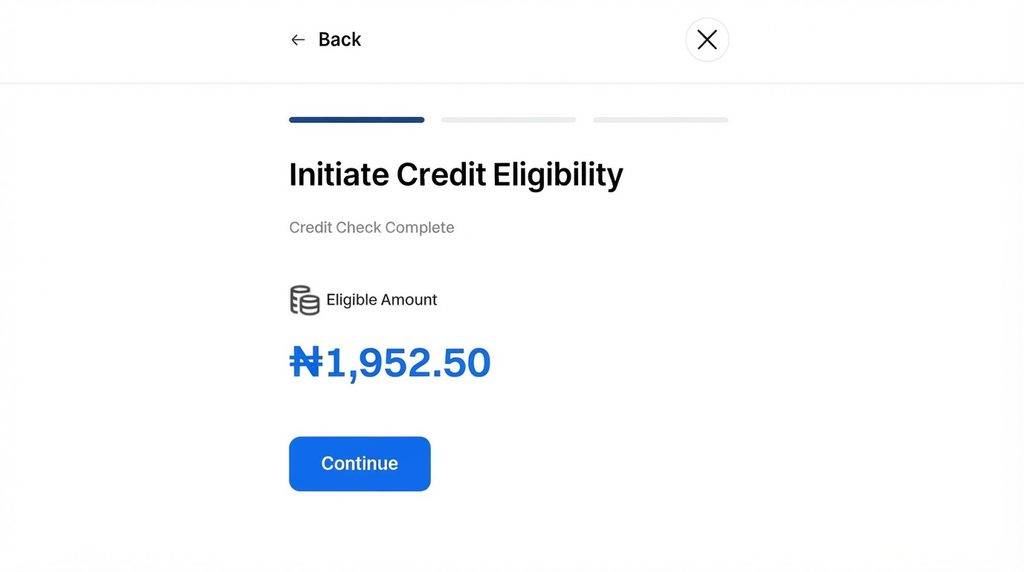
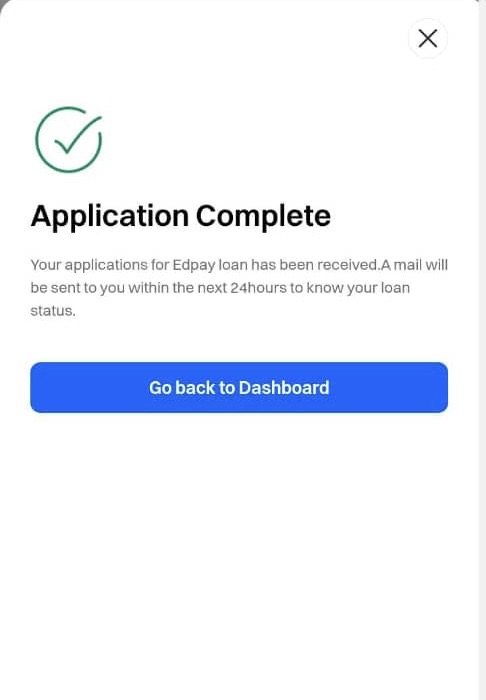
    At a high level, the process is straightforward. You apply and provide your child’s and school’s details. Edubanc runs eligibility checks and verifies the school and fees information. Once approved, the school fees are paid directly to the school, and you begin repaying according to the schedule you agreed to.

    We won’t go too deep into the mechanics here since there’s already a dedicated guide that walks through how the EdPay school fees application works step by step, if you’d like the fuller picture.

    Can I Get a School Fees Loan If My Child’s School Isn’t Registered With the Lender?

    Yes, you can.

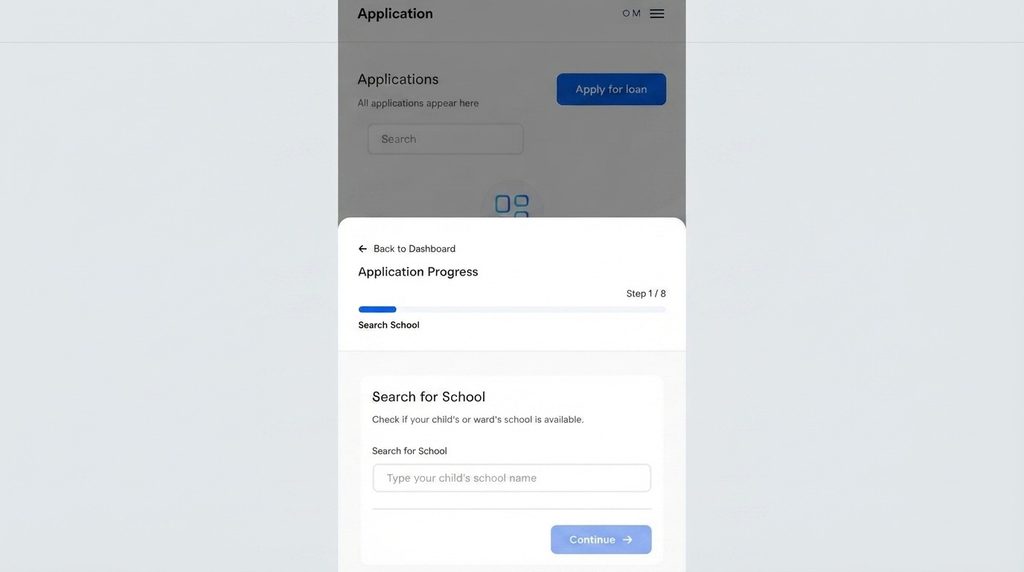
    A common worry among parents is that their child’s school needs to already be on a lender’s list before financing is even possible. With Edpay, that’s not a barrier. You can start your application even if your child’s school hasn’t been onboarded with Edubanc before. You simply provide the school’s information as part of your application, and the necessary verification is handled from there.

    In other words, an unfamiliar or newly listed school shouldn’t stop you from applying.

    School information section for EdPay school fees loan application

     Apply for Edpay tuition financing here 

    Paying School Fees for Two or More Children

    Here’s where the math gets heavier for a lot of households. One child’s fees might feel manageable on their own, but when two or three children resume around the same period, those individual amounts stack into a single, much larger lump sum.

    Picture a parent with three children, each owing a moderate amount in fees. Individually, each figure looks workable. Added together and due within days of each other, that total can rival a month’s rent or more.

    Planning ahead helps. Budgeting for the resumption period well before it arrives, prioritising which payments are most time sensitive, and being honest about what cash is actually available all go a long way. Where the combined school fees payment still outpaces what’s on hand, school fees financing becomes a practical way to cover the total upfront while spreading the school fees loan repayment across a period that suits the household.

    EdPay School Fees Financing vs Personal Loans: Which Makes More Sense?

    Both can get you to the same immediate goal, paying the school on time, but they’re built for different things.

    A personal loan is typically multipurpose. It can go toward fees, but it can just as easily go toward rent, a car repair, or anything else, and the lender generally isn’t structuring the product around education. Edpay, on the other hand, is purpose built for school related payments. The funds are directed specifically at the approved school fees, and the payment goes straight to the school rather than through the parent.

    A few points worth comparing:

    • Purpose. Personal loans serve general needs. Edpay is built specifically around school fees.
    • How funds are used. A personal loan gives you flexibility to spend as needed. Edpay is tied to the fees amount you applied for.
    • Payment to the school. With Edpay, the school is paid directly. With a personal loan, you typically pay the school yourself after receiving the funds.
    • Repayment structure. Both involve repayment over time, though terms vary by lender and product.
    • Convenience for school fees is needed specifically. Edpay removes the extra step of managing the payment yourself once the loan lands in your account.

    Neither option is universally cheaper or better. It comes down to your circumstances. That said, when the specific need is education fees, purpose built financing like Edpay tends to fit the situation more naturally than a general purpose loan. You can explore Edpay school fees financing to see if it fits yours.

    Looking for a Back-to-School Loan? What to Check Before You Apply

    If you’ve been searching for a back-to-school loan, a few things are worth reviewing before you submit any application, regardless of which lender you choose.

    • Amount required. Know the exact figure the school expects, not an estimate.
    • Repayment affordability. Be realistic about what you can comfortably repay each period without straining other expenses.
    • Bank statement and NIN. Most lenders will ask for these as part of verifying your identity and financial standing.
    • Eligibility. Check the lender’s basic requirements before applying, so there are no surprises.
    • School admin details and invoice for verification. Have your child’s school information and the fees invoice ready, since this speeds up verification.
    • Repayment period and terms. Understand how long you’ll be repaying and under what terms before you commit.

    Going in prepared makes the whole process faster and reduces the chances of delays once you apply.

    How to Apply for School Fees Financing With Edpay

    If school fees financing sounds like the right fit for your situation, applying is the next step.

    Apply for School Fees Financing

    School fees don’t have to become one overwhelming cash-flow moment, even when the full amount isn’t available right away. With a bit of planning, a realistic look at what you can afford, and a school fees financing option like EdPay when it makes sense, you can meet the payment on time without draining every other part of your budget.

    With Edpay

    Choose the repayment path that fits your household, and let your child’s resumption stay one less thing to worry about.

  • How Edpay Works: Step-by-Step Guide for Parents

    How Edpay Works: Step-by-Step Guide for Parents

    For many parents, paying school fees can be one of the biggest financial challenges of the academic year. Rising tuition costs, multiple household expenses, and unexpected emergencies can make it difficult to pay large school fees upfront.

    That’s where EdPay by Edubanc comes in.

    EdPay is designed to help parents spread school fee payments into affordable installments, reducing financial pressure while ensuring children continue their education without interruption.

    In this guide, we’ll explain exactly how EdPay works and how parents can get started.

    What Is EdPay?

    EdPay  is a flexible school fee financing solution powered by Edubanc that enables parents to pay school fees over time instead of making a single lump-sum payment.

    Rather than worrying about meeting tuition deadlines with one large payment, parents can access a structured repayment plan that fits their budget.

    The goal is simple: make quality education more accessible and affordable for families.

    Why Parents Need Flexible School Fee Payments

    School fees often come at the same time as other major financial responsibilities such as:

    • Rent
    • Utility bills
    • Transportation costs
    • Food and household expenses
    • Medical bills

    When all these expenses compete for attention, paying school fees can become overwhelming.

    EdPay helps bridge this gap by giving parents greater financial flexibility and peace of mind.

    How EdPay Works (Step-by-Step)

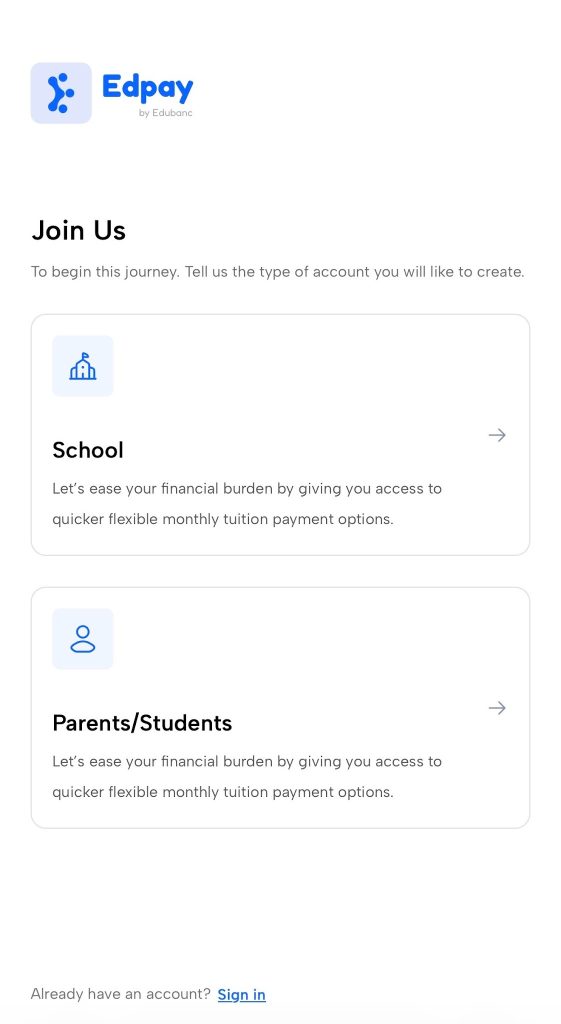
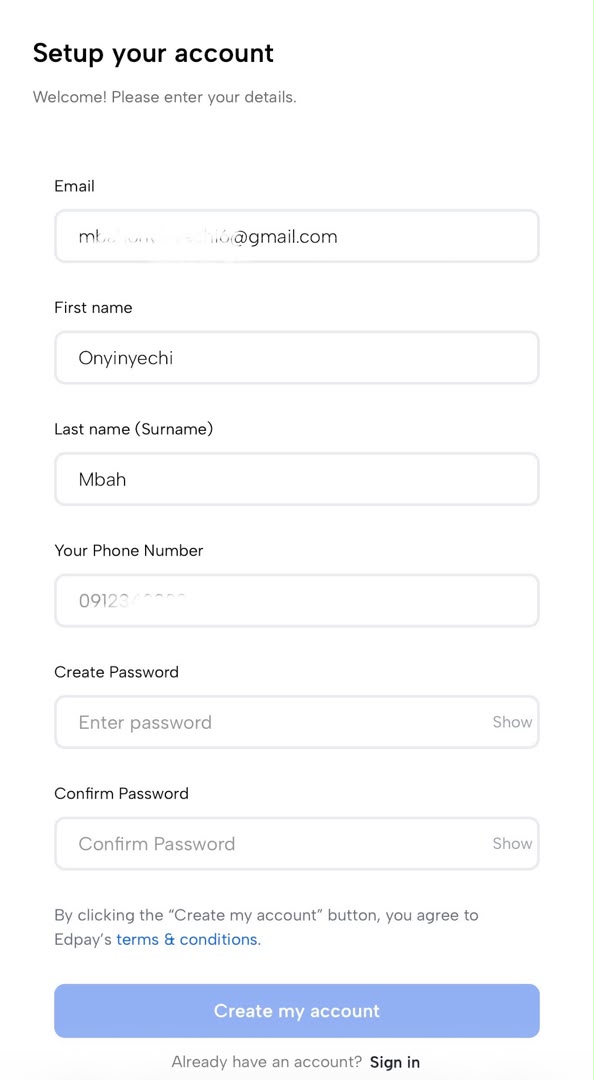
    Step 1: Create an Edpay Account

    The first step is to register on the Edpay platform.

    You’ll need to provide basic information such as:

    • Full name
    • Email address
    • Phone number
    • Identification detail
    Account Setup

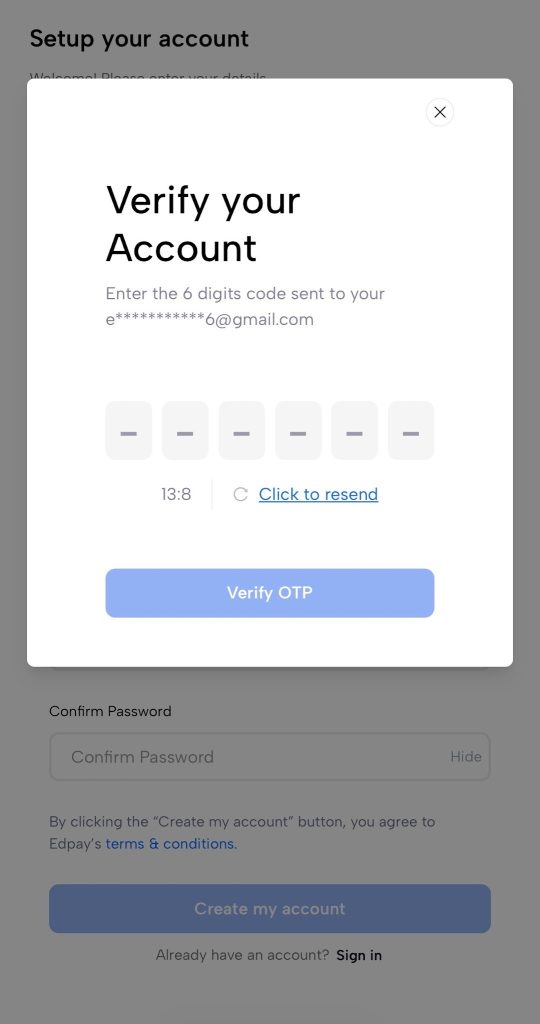
    A verification code would be sent to your email upon creation 

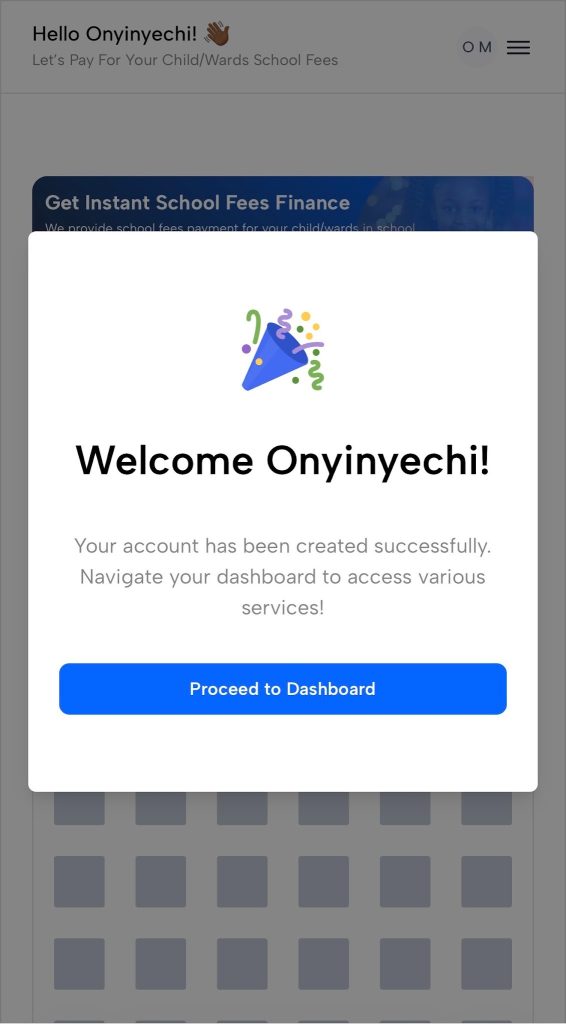
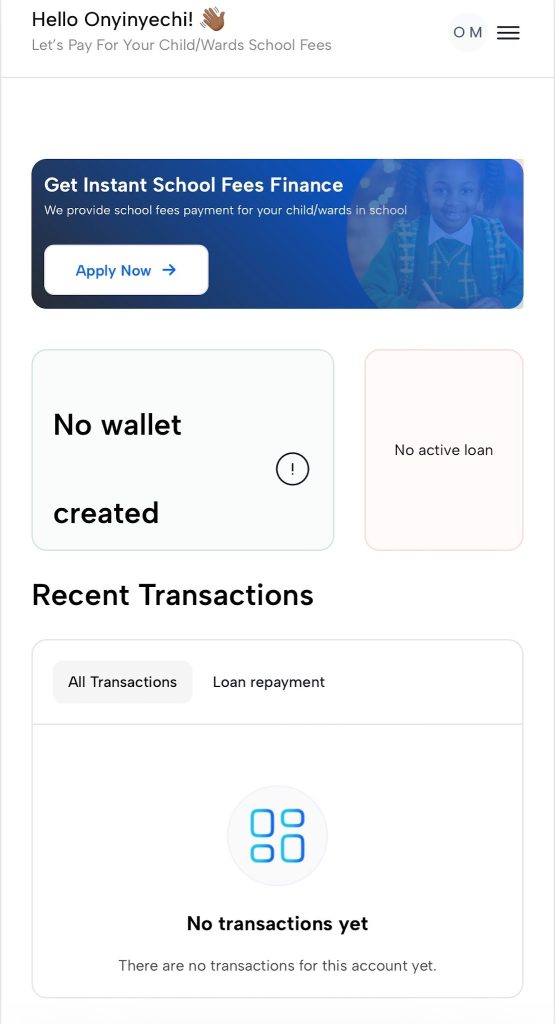
    Once your account is created, you’ll gain access to your personalized dashboard.

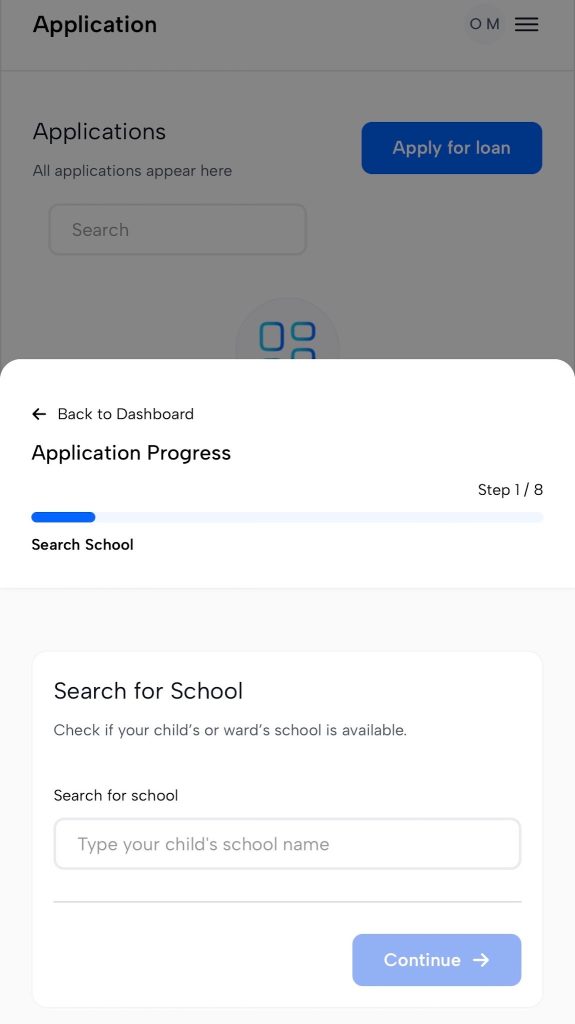
    Step 2: Add Your Child’s School Information

    After registration, provide your child’s academic details, including:

    • School name
    • Student name
    • Class or grade level
    • School fee amount

    This information helps Edubanc process your financing request efficiently. If you can’t find your school in our platform, there’s an option to put in the school’s details, so we can reach out. 

    Step 3: Apply for tuition financing on EdPay

    Next, submit your application for school fee financing through the platform.

    The process is designed to be simple, fast, and entirely digital.

    You may be asked to provide supporting documents to verify your information.

    Step 4: Application Review and Approval

    Once your application is submitted, Edubanc reviews your information to determine eligibility.

    During this stage, factors such as:

    • Personal Verification details
    • Financial information
    • Credibility Check
    • Application completion may be assessed.
    • If approved, you’ll receive details of your repayment plan.

    Step 5: School Fees Are Paid

    After approval, Edubanc pays the approved school fees directly to your child’s school.

    This allows your child to continue attending classes while you repay according to your agreed schedule.

    Step 6: Repay in Convenient Installments

    Instead of making one large payment, you’ll repay the financed amount in smaller, manageable installments.

    Through your Edubanc dashboard, you can:

    • Track repayments
    • View payment schedules
    • Monitor outstanding balances
    • Stay informed about upcoming payments

    Benefits of Using EdPay

    1. Affordable Monthly Payments

    Break down large school fees into smaller payments that are easier to manage.

    2. Reduced Financial Stress

    Avoid the pressure of sourcing a large amount of money before every school term.

    3. Quick Application Process

    The application process is streamlined to save parents time and effort.

    4. Continuous Learning for Children

    Ensure your child remains focused on learning without disruptions caused by unpaid school fees.

    5. Better Financial Planning

    Flexible payment schedules make it easier to manage household finances while investing in your child’s education.

    Tips for a Successful EdPay Application

    To improve your experience:

    • Apply before school fee deadlines.
    • Ensure all information submitted is accurate.
    • Upload required documents promptly.
    • Monitor your repayment schedule regularly.
    • Contact support if you need assistance.

    Why Families Trust Edubanc

    Edubanc is committed to helping families access quality education through innovative financial solutions.

    By combining technology with flexible financing, Edubanc empowers parents to make educational investments without unnecessary financial strain

    Frequently Asked Questions (FAQs)

    What is EdPay?

    EdPay is a school fee financing solution that allows parents to pay tuition fees in installments instead of making a full upfront payment.

    Who can apply for EdPay?

    Parents and guardians seeking flexible payment options for school fees can apply, subject to eligibility requirements.

    How long does the application process take?

    Application typically can be done in a day. However, disbursement timelines may vary depending on verification requirements and documentation submitted. 

    Does EdPay pay the school directly?

    Yes. Once approved, Edubanc pays the approved school fees directly to the school. If your child’s school is not partnered with Edubac, we can always reach out on your behalf. 

    Can I track my repayments?

    Yes. Parents can monitor payment schedules, repayment history, and outstanding balances through their Edubanc dashboard.

    Why should I use EdPay?

    EdPay helps reduce financial pressure, improves budgeting, and ensures children can continue their education without interruptions.

    Final Thoughts

    Education is one of the most important investments parents make for their children. However, managing school fees shouldn’t create unnecessary stress.

    With EdPay, parents gain access to a smarter and more flexible way to finance education. By spreading school fees into manageable instalments, families can focus on what matters most, helping their children succeed.

  • Can You Borrow to Pay Tuition? Pros and Cons

    Can You Borrow to Pay Tuition? Pros and Cons

    Understanding Tuition Payment


    Tuition payment refers to the fees charged by schools, colleges, and universities for the education and services they provide. These fees cover instructional costs, use of facilities, examination fees, and sometimes additional academic support services. Tuition is a fundamental expense for students and their families, often representing a significant financial commitment.

    In Nigeria, the structure of tuition payment is somewhat unique compared to other countries. Many educational institutions require parents or guardians to pay tuition fees in installments, commonly three times within a single semester. This means that within a few months, parents are expected to make several substantial payments to keep their children enrolled and in good academic standing.

    This payment structure can be challenging because it demands consistent cash flow multiple times a year. For many families, especially those with limited or unpredictable income, this can create considerable financial pressure.

    The Financial Challenge for Parents
    Paying tuition multiple times a year can stretch family budgets thin. Many parents juggle various household expenses such as food, housing, transportation, healthcare, and other children’s needs alongside tuition fees. The economic environment in Nigeria, marked by inflation and job uncertainty, adds to the difficulty of meeting these repeated payment deadlines.

    As a result, some parents explore the option of borrowing money or taking loans to cover tuition fees. While this can provide immediate relief, it is important to weigh both the benefits and risks associated with borrowing for education.

    Pros of Borrowing to Pay Tuition

    • Access to Immediate Funds: Loans can provide the necessary money quickly, allowing parents to meet tuition deadlines on time and avoid penalties or withdrawal of their children from school.
    • Ensures Continuity of Education: Borrowing helps prevent disruption in a child’s academic journey. Missing tuition payments can lead to suspension or expulsion, so loans can be a tool to keep education ongoing.
    • Credit Building Opportunity: For parents who have limited credit history, responsibly managing a loan by making timely repayments can help build or improve their credit score, which may be useful for future financial needs.
    • Flexible Repayment Options: Some lending institutions offer flexible repayment plans tailored to a borrower’s income flow, making it easier to manage repayments without overwhelming financial strain.

    Cons of Borrowing to Pay Tuition

    • Interest and Additional Costs: Loans typically come with interest rates and sometimes processing fees, increasing the total amount paid back compared to the initial borrowed sum. This can add financial burden over time.
    • Debt Accumulation: Regular borrowing without adequate repayment can lead to mounting debt, which can spiral into financial stress and impact the family’s overall economic stability.
    • Risk of Overextending Finances: Without careful planning and budgeting, parents may borrow more than they can afford to repay, leading to defaults, penalties, and potential damage to creditworthiness.
    • Emotional and Psychological Stress: The pressure of managing debt and monthly repayments can cause anxiety and stress, affecting family well-being.

    Final Advice for Parents


    Taking loans to pay tuition fees is not a decision to be taken lightly, but it is not inherently negative either. When done responsibly, borrowing can provide a valuable solution to meet tuition obligations without disrupting your child’s education.

    Parents should carefully evaluate their financial situation before borrowing. This includes considering their monthly salary, other income sources, existing debts, and regular household expenses. Borrow only what you are confident you can repay within the agreed time frame to avoid unnecessary financial hardship.

    Remember, the goal is to support your child’s education while maintaining your family’s financial health. Responsible borrowing, combined with good budgeting and financial planning, can make this balance achievable.

    Need a tuition loan?

    Edubanc offers flexible payment options for up to ₦2,000,000 in tuition, salary, and exam fees.

  • Students Dropout Rates. A Direct Consequence of Rigid Payment Structure

    Students Dropout Rates. A Direct Consequence of Rigid Payment Structure

    Every resumption season, a familiar, heartbreaking scene plays out across private primary schools. While most children gather for morning assembly, a handful are quietly guided toward the administrator’s office, waiting for their parents to pick them up. Their offense? An unpaid balance on their termly invoice.

    When we discuss the “out-of-school children” crisis, the narrative often focuses on macro-economics or systemic lack of infrastructure. But on the ground, the issue is frequently much simpler and more design-focused: Rigid, upfront payment structures that treat primary education as a luxury commodity rather than an ongoing developmental need. 

    For working-class and mid-income families, the demand for a massive lump-sum payment every four months is a structural bottleneck that directly compromises a child’s foundational learning.

    The Seasonal Financial Shock for Parents

    For the average household, the school calendar represents a series of steep financial hurdles. When a child transitions to a new class or begins a new term, tuition isn’t the only bill that drops. Parents are simultaneously hit with a wave of upfront demands:

    • Textbooks and Workbooks: Which must be bought brand new each year.
    • School Uniforms and Sportswear: To accommodate fast-growing kids.
    • Stationery, Transportation, and Feeding Levies.

    When a primary school rigidly demands 100% of these fees before a child can set foot in a classroom, it creates an artificial liquidity crisis. A parent might have a stable monthly salary or a steady business income, but their revenue flows in cycles. Forcing a parent to produce three to four months of capital all at once causes severe budgeting strain.

    When a minor cash flow delay happens, such as a late client invoice or an unexpected medical bill, the school fees are delayed. The result? The child is sent home, missing critical foundational weeks of numeracy and literacy.

    Image showing a mother in school because of school fees

    The Hidden Cost to the School: The Churn Rate

    Many primary school administrators defend rigid structures by pointing to their own operational realities. Schools have massive, immediate overhead at the start of a term: they must pay teacher salaries, maintain facilities, purchase teaching aids, and settle utility bills. They rely on upfront cash to survive.

    However, a strict “no pay, no entry” policy actually hurts a school’s long-term financial health in two major ways:

    1. The Administrative Nightmare of Arrears: Spreading spreadsheets across an administrative desk to track who owes what, sending aggressive reminder letters, and managing manual cash/transfer reconciliations stretches thin school offices to their limit.
    2. Student Churn and Empty Desks: When a parent falls behind and experiences the embarrassment of their child being excluded, they often pull the child out entirely to look for a cheaper, less rigorous school. The primary school doesn’t just lose that term’s fee; they lose the lifetime value of that student from Basic 1 through Basic 6.

    A Different Approach

    The solution lies in closing the gap between how parents earn money (monthly or weekly) and how schools need money (termly). Forward-thinking schools and emerging education fintech platforms are proving that flexible payment frameworks keep classrooms full and school accounts stable. 

    • For the Pupils: They enjoy uninterrupted learning during their most critical formative years. They are spared the psychological trauma and social stigma of being singled out or sent home due to financial issues.
    • For the Parents: School fees transition from a terrifying, seasonal crisis into a predictable, manageable line item in the monthly household budget.
    • For the Schools: Instead of facing erratic, uncollected debts and a high student turnover rate, the school secures a highly predictable, recurring revenue stream that keeps operations running smoothly all year long.
    Children working on a project in thr classroom

    The Bottom Line is a child’s primary education should never be disrupted by a calendar deadline. By replacing rigid payment structures with human-centric, flexible alternatives, private primary schools can protect their enrollment numbers, support hard-working parents, and most importantly, keep children right where they belong, in the classroom.

    Are school fee deadlines causing you to lose students?

    Don’t let rigid payment structures empty your classrooms. Discover how our flexible billing management system bridges the gap for parents while securing your school’s termly revenue.

  • The Rising Cost of Learning: A Deep Dive into Nigeria’s Education Financing Gap

    The Rising Cost of Learning: A Deep Dive into Nigeria’s Education Financing Gap

    Secondary students in an exam scholl supervised by thier teacher in classroom.

    Education is often called the backbone of a nation’s future, yet in Nigeria, that backbone is under tremendous strain. The rising cost of education has become a pressing concern, casting a long shadow over the dreams of millions of Nigerian students and their families. This blog post takes a close look at the widening education financing gap in Nigeria, exploring the causes, impacts, and possible pathways forward.

    Let’s start by setting the scene: Nigeria’s population is young and growing rapidly, making education more important than ever. But as demand for quality education soars, the financial resources to support it have not kept pace. The result? A gap that is pushing the cost of learning out of reach for many.

    Why Is the Cost of Learning Rising?

    Several factors contribute to the escalating costs of education in Nigeria. Public funding for schools has struggled to keep up with increasing enrollment figures. Infrastructure is ageing, often inadequate, and requires significant investment to improve. Meanwhile, inflation and economic instability have driven up costs for everything from textbooks to school uniforms and transportation.

    Another critical factor is the limited availability of affordable private education options and scholarship programs. Many families are left scrambling to cover tuition fees and other hidden costs, which continue to rise without a corresponding increase in household incomes.

    The Financing Gap: What Does It Mean?

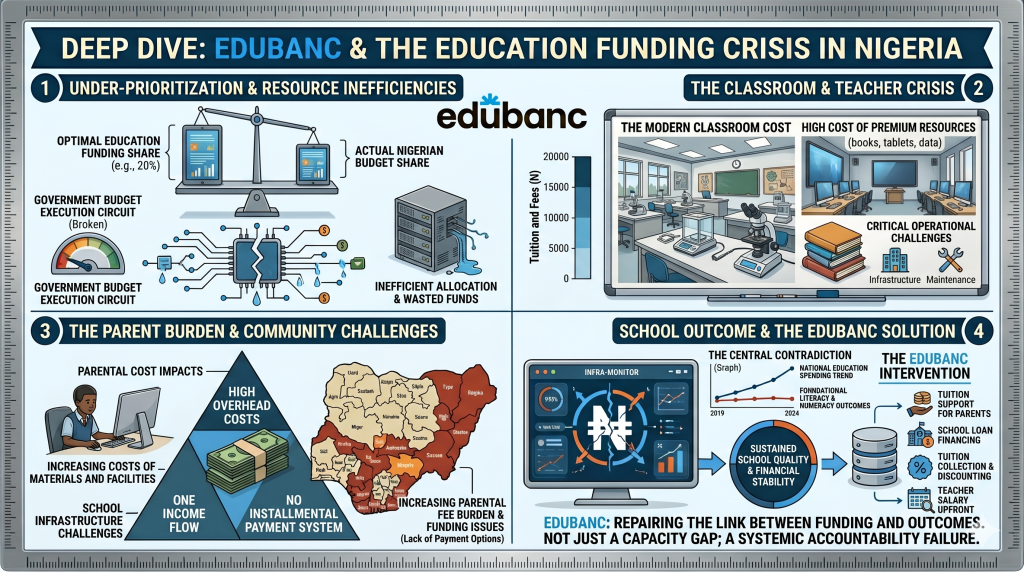
    The education financing gap refers to the shortfall between the funds needed to provide quality education and the actual financial resources available. In Nigeria, this gap is wide and growing. According to various reports and education experts, billions of naira are needed annually just to bridge the divide and ensure all children have access to basic and higher education.

    Edubanc and the education funding crisis in Nigeria.

    This financing gap has a ripple effect. It contributes to overcrowded classrooms, poorly paid teachers, and a lack of essential learning materials. In turn, these conditions undermine the quality of education, affecting student performance and future opportunities.

    Who Bears the Brunt?

    Unsurprisingly, the most vulnerable are children from middle to low-income families and rural areas, who suffer the most. When costs rise, many families are forced to make difficult choices, sometimes pulling children out of school or reducing educational spending on essentials. Girls, in particular, are disproportionately affected, with increased dropout rates due to financial pressures.

    On a broader scale, this financing gap threatens national development. Nigeria’s workforce of tomorrow depends on the skills and knowledge acquired today. Without adequate investment in education, the country risks stalling its economic growth and social progress.

    The Burden on Parents 

    While much of the focus on Nigeria’s education financing gap centres on public education, it’s crucial to recognise that parents who send their children to private schools are also significantly impacted. Private schools, often seen as a refuge for quality education amid challenges in the public system, are facing their own financial pressures. As the economy fluctuates and inflation rises, these schools increase their fees to cover operational costs, staff salaries, and facility maintenance.

    For many families, this means a continuous struggle to meet growing tuition bills. The burden on parents intensifies as they try to balance household expenses with the escalating costs of private education. In some cases, families are forced to make painful decisions, such as withdrawing children from school or taking on debt to keep up with payments.

    This cycle reflects how the broader economic environment fuels the education financing gap. It underscores the need for comprehensive solutions that address both public and private education sectors, ensuring affordability and sustainability for all families striving to provide the best possible learning opportunities for their children.

    The Burden on Private Schools

    Private schools in Nigeria face significant financial and operational challenges that are often overlooked in discussions about the education financing gap. Despite being seen as alternatives to the public education system, many private institutions struggle to maintain quality amid rising costs driven by the broader economic environment.

    Operational expenses such as staff salaries, facility maintenance, utilities, and educational materials have all increased substantially due to inflation and economic instability. Many private schools operate on tight budgets and rely heavily on tuition fees as their primary revenue source. When families experience financial difficulties and delay or default on payments, private schools face cash flow problems that affect their ability to function effectively.

    Additionally, private schools must continuously invest in infrastructure, technology, and teacher training to meet growing expectations and regulatory requirements. This need for ongoing investment adds pressure to already stretched financial resources. Some schools are forced to increase fees regularly to keep up, but doing so risks pricing out families and reducing enrollment.

    In essence, private schools are caught in a challenging cycle: they must raise fees to cover rising costs but risk losing students if fees become unaffordable. This dynamic threatens the sustainability and quality of private education in Nigeria, underscoring the importance of targeted support and innovative financing solutions for these institutions.

    Charting a Way Forward

    Closing Nigeria’s education financing gap is not just a policy challenge; it’s a moral imperative. The cost of learning must not price out the dreams of millions of young Nigerians eager to learn and contribute to their society. With concerted effort from the government, the private sector, communities, and international partners, it’s possible to build a more equitable, accessible, and high-quality education system.

    Companies like Edubanc are stepping up to bridge this gap by offering tailored school fees loan solutions to schools, parents, and students. Whether it’s helping schools improve infrastructure, supporting parents in managing tuition fees, or enabling students to take important exams, Edubanc is playing a vital role in making education more affordable and accessible for all.

    Thank you for joining me on this deep dive into one of Nigeria’s most urgent challenges. Next week, we’ll explore innovative education technologies that are reshaping learning experiences across Africa. 

    Need help with Financing?

    Our goal is to improve educational quality, support schools, parents, and reduce the no of out-of-school children in Nigeria by providing stability in school fees payment, and sustainable education intervention.